



Top Food Sealer Machine Suppliers for Global Buyers
Choosing the right Food Sealer Machine supplier requires more than comparing prices on a product page. Global buyers must examine sealing performance, machine materials, production capacity, certifications, and after-sales support. A polished catalog can hide practical limitations.
This guide explores leading suppliers serving food processors, retailers, wholesalers, and packaging distributors across international markets. It considers equipment such as vacuum sealers, continuous band sealers, tray sealers, and industrial chamber machines. Each category suits different packaging volumes, product textures, and workspace conditions. A small bakery may need a compact tabletop unit, while a frozen-food plant may require stainless steel equipment with stronger vacuum performance and washable components.
Real purchasing decisions depend on details. Can the supplier provide test samples? Are replacement heating elements available? Does the control panel support the buyer’s language and power requirements? These questions often matter more than a low quotation. Reliable suppliers should offer clear specifications, responsive technical guidance, and documented quality procedures. Buyers should still verify claims independently, because product ranges and certifications can change.
Not every machine fits every market. That matters.
The following overview compares supplier strengths, manufacturing experience, export capabilities, and service reliability. It also highlights points that deserve closer inspection, including lead times, minimum order quantities, warranty terms, and installation support. Some evaluations may remain imperfect because supplier information is updated at different speeds. Careful buyers should request current documents, conduct performance tests, and assess total operating costs before placing an order. A dependable partnership begins with evidence, not attractive promises.
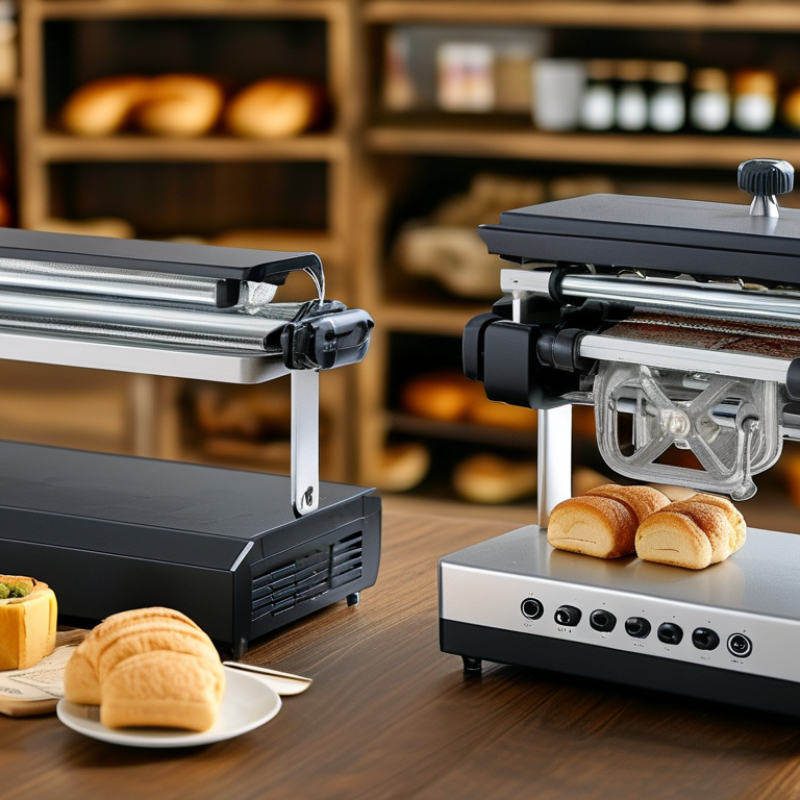
What Is a Food Sealer Machine and How Does It Work?
A food sealer machine closes a package by joining its open edges with heat, pressure, or both.
Common systems use heated bars, vacuum chambers, or continuous belts. In vacuum sealing, the pump removes air before the jaws compress and fuse the film. Modified-atmosphere systems replace some air with a controlled gas mixture. The result is a tighter barrier against oxygen, moisture, dust, and handling damage.
The Food Waste Index Report 2024 estimates that 1.05 billion tonnes of food were wasted globally in 2022. Better sealing cannot solve every cause, but it can slow oxidation and moisture loss in suitable products.
FAO research also links packaging performance with longer storage and reduced food loss across supply chains. The machine must match the product. Soft bread, oily meat, and dry powders need different pressure, temperature, and dwell-time settings.
Seal quality depends on film thickness, jaw cleanliness, cooling time, and operator training. A wrinkled pouch may look acceptable but leak during transport. It happens.
Buyers should request seal-strength tests, leakage tests, and production samples from suppliers. ISO 11607 provides useful guidance for packaging validation, although food applications still require product-specific testing.
Real production lines are messier than demonstrations. Condensation, uneven filling, and rushed maintenance can weaken results. A capable supplier should explain these limits, provide readable settings, and support verification after installation.

Key Types of Food Sealer Machines for Different Packaging Needs
For global buyers, choosing a food sealer machine starts with the packaging material, product texture, and production rhythm. Impulse sealers suit small batches, pouches, and heat-sensitive films. They seal only when the jaws close, which reduces energy use. Constant-heat sealers work better with coated films, thick laminates, and frequent production. The seal looks simple. Yet poor temperature control can wrinkle film or weaken the seam.
Vacuum chamber sealers remove air from products inside a chamber before sealing. They handle meat, cheese, coffee, and prepared foods with consistent pressure. External vacuum sealers fit smaller operations because bags remain outside the chamber. They are practical, but moisture can reach the pump if operators skip liquid protection. For modified-atmosphere packaging, gas-flushing equipment replaces oxygen with a controlled gas mix. It requires accurate sensors, clean connections, and trained operators. A small leak matters.
Continuous band sealers support long runs of dry goods, powders, and snacks. Vertical models suit liquids or products that settle at the bottom of a pouch. Tray sealers help processors close preformed trays with film lids. When comparing suppliers, buyers should request seal-strength data, spare-part lists, and sample tests using their own films. Ask about cleaning access, temperature range, warranty response, and operator training. A fast machine is not always the right machine. In practice, line speed, seal width, and maintenance time often matter more than advertised output. Some early estimates fail. Pilot testing exposes those gaps before installation.
Top Food Sealer Machine Suppliers for Global Buyers - Key Types of Food Sealer Machines for Different Packaging Needs
The chart compares representative throughput levels for major food sealer machine types. Impulse and vacuum chamber sealers are commonly used for small-batch operations, while continuous band, tray, and vertical form-fill-seal machines are better suited to higher-volume packaging lines. Actual output depends on package size, material, sealing temperature, product type, and operator or automation level.
How to Evaluate Food Sealer Machine Suppliers Worldwide
A capable supplier should prove performance with your actual products, films, and production speeds. Request a factory acceptance test using identical packaging materials. Measure seal strength, leakage rates, cycle time, temperature stability, and cleaning access. The less glamorous details matter. A polished video proves little.
PMMI’s 2023 State of the Industry report valued U.S. packaging machinery shipments at approximately 10.3 billion dollars. This scale reflects strong demand for automation, but it also increases supplier choices and evaluation risks. Mordor Intelligence’s 2025 analysis projects the food packaging equipment market to grow at over 5% annually through 2030. Buyers should compare total ownership costs, not only purchase prices.
Examine stainless-steel grades, electrical components, software support, and spare-part availability. Ask for documented service response times across your target regions. Check whether the supplier provides installation training, remote diagnostics, and preventive-maintenance schedules. Request references from facilities with similar humidity, dust, and operating hours. Review certifications applicable to your destination markets, then verify them independently.
I would not treat the cheapest quotation as the strongest offer. Shipping delays, customs handling, and unavailable heating elements can stop production. One gap remains: suppliers may understate film compatibility. Test difficult materials, including recycled structures and high-moisture products. Record every result in a comparison sheet. A supplier that accepts failed trials openly may be more reliable than one promising perfect performance.
Quality, Safety, and Certification Standards for Global Buyers
Top Food Sealer Machine Suppliers for Global Buyers
Quality begins with measurable food safety controls, not attractive machine photographs. The World Health Organization estimates that contaminated food causes 600 million illnesses and 420,000 deaths annually. Therefore, sealing equipment must protect product integrity throughout production, transport, and storage.
Global buyers should request documented testing against ISO 22000-based food safety systems and HACCP principles. Product-contact components should meet applicable FDA requirements or European Regulation (EC) No. 1935/2004. Electrical systems may also require IEC 60204-1 alignment and local conformity marking.
Certification matters. It is not everything.
A reliable supplier should provide seal-strength records, temperature calibration results, material specifications, and traceable maintenance procedures. Ask for samples sealed at different film thicknesses and speeds.
Inspect wrinkles, channels, weak corners, and contamination near the seal. PMMI packaging-industry reports repeatedly identify automation, inspection, and traceability as major equipment priorities. These features reduce waste, but they do not replace operator training.
The WHO’s food safety data shows why validation deserves attention. A machine can pass factory testing and still fail with humid products, dusty environments, or inconsistent film.
I would request a site acceptance test under real operating conditions.
That step costs time. It can prevent expensive recalls. Suppliers should also disclose cleaning access, spare-part availability, software support, and documented change-control procedures.
A certificate is not proof of perfect production.
Ordering, Shipping, and After-Sales Support Considerations
Top Food Sealer Machine Suppliers for Global Buyers
Ordering, Shipping, and After-Sales Support Considerations
Choosing a food sealer supplier requires more than comparing catalog prices. Confirm the sealing width, bag material, production speed, voltage, and working temperature before requesting a quotation. Ask for a sample test using your actual packaging film. A strong supplier should provide test results, machine drawings, electrical specifications, and a clear list of included parts. One detail is easy to miss. Check whether tooling, conveyors, sensors, and installation support are included. In my procurement experience, vague quotations often create higher costs later. A cheaper machine may need costly adjustments for thick or moisture-sensitive packaging.
Shipping arrangements also deserve careful review. Request the packed dimensions, gross weight, crate photos, and estimated production date. Moisture-resistant packaging matters when machines travel through humid ports. Confirm the delivery term, export documents, insurance responsibility, and spare-parts shipment process in writing. Ask whether the supplier has handled similar destinations before. Port delays happen. A practical supplier should explain possible delays without making unrealistic promises.
After-sales support can determine whether the equipment remains useful after installation. Look for a written warranty, response times, remote troubleshooting, and replacement-part availability. Request operating videos and a maintenance schedule before the machine leaves the factory. Ask how technicians diagnose uneven seals, temperature errors, or worn belts. I have learned that verbal promises are difficult to enforce. Keep every commitment in the purchase contract. Support quality can still vary by technician, time zone, and language, so test communication before payment.
Article Source:
Siemensstraße 13-15
47608 Geldern
NRW Deutschland
Mail: sale@atmmachinesolutions.com
Head office:
+49 (0) 2831 91021-20
Fax:
+49 (0) 2831 91021-99
SUPPORT and INFO
from 3 p.m. to 6 p.m:
+49 (0) 2831 91021-60
( please ring for a long time )
Monday to Friday
8.00 – 12.30
and 13.00 – 15.00
Visit / collection by appointment only!
➣ Sign up for our newsletter
Benefit from a 20% discount, don’t miss any events and always stay up to date.
To access the actual content, click on the button below. Please note that data will be passed on to third-party providers.
More information