



Top Electrical Parking Lift Manufacturers for Global Buyers

Urban density is reshaping how cities store vehicles. The solution is not simply more concrete. It is smarter, safer, and more space-efficient equipment.

Allied Market Research valued the global automated parking system market at approximately US$1.9 billion in 2021. Its report projected the market could reach nearly US$4.8 billion by 2031. Fortune Business Insights also identified strong growth through 2032, driven by land shortages, urban development, and rising vehicle ownership. These figures support the expanding role of the Electrical Parking Lift in commercial buildings, residential projects, dealerships, and logistics facilities.

Space matters.

Professor Richard Willson, a recognized parking policy expert, has stated, “Parking is a land-use issue, not just a transportation issue.” His observation remains highly relevant when buyers compare lifting height, platform dimensions, cycle speed, noise, and maintenance access. A reliable Electrical Parking Lift should also provide clear load ratings, emergency lowering systems, anti-fall protection, and documented electrical compliance.

Yet market claims need careful review. Some manufacturers publish impressive lifting speeds without explaining real operating conditions. Others show polished installations but provide limited information about spare parts or service coverage. Global buyers should examine factory experience, testing records, warranty terms, installer training, and local technical support. These details can matter more than a low purchase price.

This guide evaluates leading Electrical Parking Lift manufacturers for international buyers. It considers engineering capability, product range, customization, safety documentation, delivery performance, and after-sales reliability. No supplier is perfect. The strongest choice depends on the site, vehicle weight, climate, regulations, and long-term operating expectations.
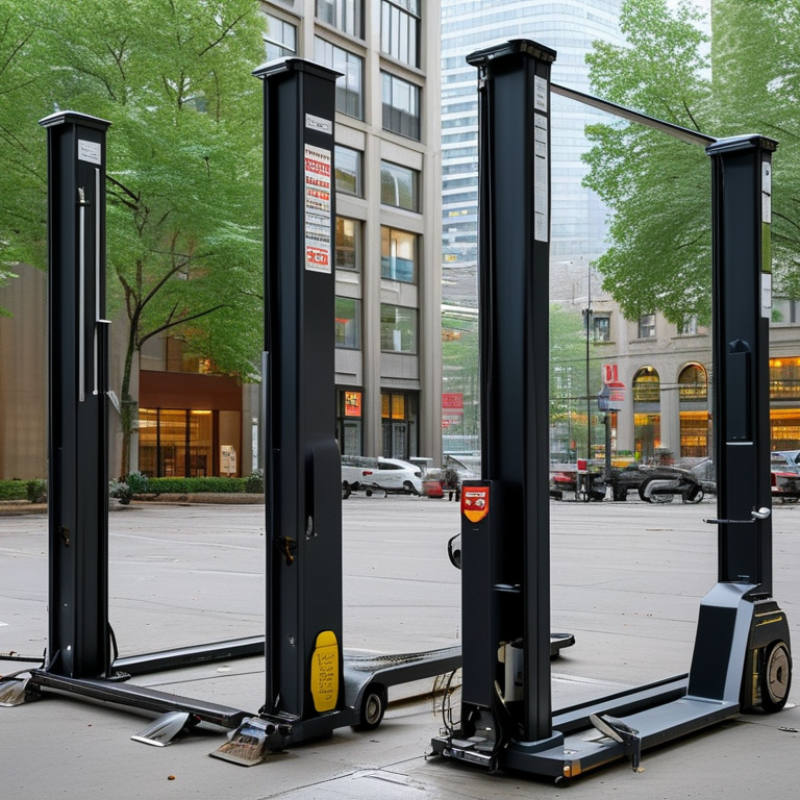
Top Electrical Parking Lift Manufacturers for Global Buyers

Electrical Parking Lift Systems: Types, Functions, and Core Technologies

Electrical parking lift systems combine vehicle storage, vertical movement, and controlled energy use. Common types include two-post, four-post, puzzle, and automated tower lifts. Two-post models suit small garages, while four-post systems offer stronger support for heavier vehicles. Puzzle systems save floor space, but require accurate vehicle scheduling. The IEA’s Global EV Outlook 2024 recorded nearly 14 million electric cars sold in 2023, about 18% of new-car sales. This growth makes charging access and cable protection important in lift design.

Core technologies include electric motors, screw or hydraulic drives, programmable logic controllers, load sensors, and mechanical locking devices. Photoelectric sensors can detect obstacles, while emergency-stop circuits limit unsafe movement. Charging integration needs interlocks, proper cable routing, and clear maintenance access. EN 14010 and local machine-safety rules should guide technical evaluation. UNEP’s 2024 Global Status Report for Buildings and Construction reported that buildings consumed about 32% of global energy. Therefore, standby power and motor efficiency deserve attention. Faster is not always better. High speed may increase noise, wear, and peak demand.

Tips: Ask manufacturers for tested load curves, cycle-time data, noise levels, and inspection records. Check performance with real vehicle dimensions, not brochure averages. No design fits every garage. A missed detail, such as drainage or ceiling clearance, can make an efficient lift impractical. Select suppliers with documented commissioning procedures, operator training, spare-parts planning, and responsive technical support.


Key Criteria for Evaluating Global Parking Lift Manufacturers

Choosing a global parking lift manufacturer requires more than comparing catalog prices. Look for proven engineering experience in similar climates, vehicle sizes, and site conditions. Ask for load-test records, safety-system documentation, and installation references from completed projects. A reliable supplier should explain platform capacity, lifting speed, emergency lowering, and mechanical locking systems clearly.

Inspect the details that brochures often hide. Check steel thickness, weld quality, corrosion protection, control-panel labeling, and sensor access. Confirm whether replacement parts are available in your region. Response time matters when one lift serves several vehicles. Warranty terms should cover more than the motor. They should address structural components, controls, and installation support. A polished presentation is not proof of long-term performance. I have seen attractive specifications leave important maintenance questions unanswered.

Tips: Request a sample maintenance schedule and a video of a complete safety test. Compare total ownership costs, not only the purchase price. Ask how the manufacturer handles uneven floors, power interruptions, and operator training. Allow room for doubt. A supplier that welcomes technical questions may be more dependable than one offering quick promises.

Leading Manufacturer Profiles and Product Specializations

Top Electrical Parking Lift Manufacturers for Global Buyers

Leading manufacturers of electrical parking lifts usually specialize in one clear product category. Some focus on compact two-post lifts for homes and small workshops. Others engineer four-post platforms for SUVs, heavier vehicles, and long-term storage. Puzzle systems serve dense urban garages, while rotary platforms prioritize rapid vehicle retrieval. The right profile depends on lifting capacity, ceiling height, platform width, and daily operating cycles.

Market data explains this specialization. The United Nations projects that nearly 68% of the global population will live in urban areas by 2050. Meanwhile, the International Energy Agency reported global electric car sales above 17 million in 2024. Larger and heavier vehicles may demand stronger platforms, wider clearances, and carefully designed electrical systems. A credible manufacturer should provide tested load data, emergency lowering functions, corrosion protection, and service documentation. Product photographs are not enough.

Buyer experience exposes the weak points. Ask for installation drawings, duty-cycle ratings, spare-part availability, and training procedures. The European standard EN 14010 is a useful reference for powered parking equipment safety, but local requirements still need verification. A 2024 market report from Grand View Research identified automation and space efficiency as major parking-system growth drivers. That trend is real, yet automation can increase maintenance complexity. I would question any supplier promising “maintenance-free” operation. Dust, voltage variation, drainage, and uneven floors still matter. Good manufacturers explain these limitations clearly.

Top Electrical Parking Lift Manufacturers for Global Buyers - Leading Manufacturer Profiles and Product Specializations

Profile Primary Market Focus Main Lift Configuration Typical Rated Capacity Typical Platform Width Typical Lifting Height Drive and Control System Best-Fit Applications Key Buying Considerations
Manufacturer Profile 01 Urban residential parking Two-post electro-hydraulic lift 2,000–3,500 kg 2,300–2,700 mm 1,500–2,000 mm Hydraulic power unit with push-button control Private garages, apartment parking spaces, vehicle storage Check ceiling clearance, slab strength, vehicle wheelbase, and hydraulic safety locking.
Manufacturer Profile 02 High-density commercial parking Four-post platform lift 2,700–4,000 kg 2,500–3,000 mm 1,800–2,100 mm Hydraulic drive with mechanical locking positions Hotels, dealerships, office buildings, long-term vehicle storage Evaluate platform length, access ramp design, drainage, and floor loading.
Manufacturer Profile 03 Space-saving residential projects Scissor-type parking lift 2,000–3,000 kg 2,200–2,600 mm 1,600–2,000 mm Electro-hydraulic scissor mechanism with limit switches Townhouses, compact garages, residential redevelopment projects Confirm recessed installation requirements, pit depth, and maintenance access.
Manufacturer Profile 04 Automated parking facilities Puzzle parking system with electric drive 2,000–2,500 kg per parking space 2,400–2,700 mm Varies by project layout Electric motor, chain or screw transmission, PLC control Residential towers, mixed-use buildings, automated garages Review throughput, emergency recovery, software integration, and local approvals.
Manufacturer Profile 05 Premium vehicle storage Single-platform parking lift 2,500–3,500 kg 2,400–2,800 mm 1,700–2,100 mm Hydraulic cylinder with synchronized lifting control Collector-car storage, private clubs, secure vehicle facilities Prioritize platform finish, anti-drop protection, noise level, and sealing quality.
Manufacturer Profile 06 Heavy passenger-vehicle parking Reinforced four-post lift 3,500–5,000 kg 2,600–3,200 mm 1,800–2,200 mm High-capacity hydraulic power pack with mechanical locks SUV storage, fleet depots, service centers, public parking structures Verify axle-load distribution, ramp capacity, structural calculations, and duty cycle.
Manufacturer Profile 07 Low-rise parking optimization Tandem parking lift 2,000–2,700 kg per platform 2,300–2,700 mm 1,500–1,900 mm Hydraulic lift with sliding or tilting platform sections Basements, residential garages, valet parking areas Assess vehicle access sequence, platform overlap, drainage, and operator training.
Manufacturer Profile 08 Export-oriented modular systems Modular two-level parking lift 2,000–3,000 kg 2,300–2,800 mm 1,600–2,000 mm Electric or hydraulic drive with independent safety locks International retrofit projects, containerized delivery, small commercial sites Compare electrical standards, spare-parts availability, installation support, and certification.
Note: Capacity, dimensions, lifting height, and configuration values are representative ranges commonly used in electrical parking-lift specifications. Final values should be confirmed against the selected project design, vehicle dimensions, structural calculations, applicable safety standards, and local building regulations.

International Safety Standards, Certifications, and Compliance

Top Electrical Parking Lift Manufacturers for Global Buyers

International buyers should evaluate electrical parking lifts against recognized safety frameworks, not attractive brochures alone. Relevant references may include ISO 12100 for machinery risk assessment and IEC 60204-1 for electrical equipment. In Europe, EN 14010 may apply to vehicle parking equipment, while CE marking requires documented conformity. Other markets can require local approvals, inspections, or electrical testing. A certificate alone can mislead. Its scope, issuing body, model number, and expiration date deserve careful review.

During supplier audits, inspect practical safeguards. Check anti-fall locks, emergency-stop buttons, upper and lower limit switches, overload protection, and manual lowering procedures. Ask for rated-load tests and maintenance records. The control cabinet should show clear wiring labels, protective grounding, and suitable ingress protection. Installation drawings must match the delivered lift. Small differences matter. A platform designed for 2,000 kilograms cannot safely serve every vehicle type. Compliance also depends on installation quality, operator training, and local inspection.

Tips: Request the full declaration of conformity, risk assessment, test reports, user manual, and spare-parts list. Confirm whether documents cover the exact configuration, not merely a similar model. Ask who performs commissioning and how faults are recorded. Keep photos of safety devices during acceptance testing. Do not rely only on factory paperwork. Independent verification may cost more, but overlooking one missing interlock can cost far more. Manufacturers should also explain limitations honestly; this is where many sales discussions become incomplete.

Global Purchasing Factors: Pricing, Installation, and After-Sales Support

Top Electrical Parking Lift Manufacturers for Global Buyers

Global purchasing starts with the complete installed cost, not the factory quote. The International Energy Agency reported nearly 14 million electric car sales worldwide in 2023. This growth increases demand for compact, electrically powered parking equipment. However, regional pricing differs sharply. Buyers should compare lifting capacity, platform dimensions, control systems, shipping, customs, commissioning, and spare parts. A cheaper unit may require expensive local modifications.

Installation planning deserves equal attention. The 2023 Global Status Report for Buildings and Construction found that buildings consumed about 30% of global energy. Electrical parking lifts add concentrated loads, so engineers must verify power supply, drainage, ventilation, fire protection, and floor strength. Request certified load tests and installation drawings before signing. The process is not always smooth. Existing garages often hide uneven slabs and limited headroom.

After-sales support can determine operating reliability. Ask for response times, remote diagnostics, technician coverage, and replacement-part availability. A practical contract should define preventive maintenance intervals and warranty exclusions. Some suppliers promise worldwide service without local capability. That claim needs checking. Video training helps, but it cannot replace a trained technician beside a stalled platform. Buyers should also request references from comparable climates and usage levels. According to the U.S. Department of Energy, equipment efficiency depends partly on proper operation and maintenance, not only rated performance. Price remains important. It should never be the only measurable decision.

Kontaktbox-Frau

  • CNC-STEP – Quick contact