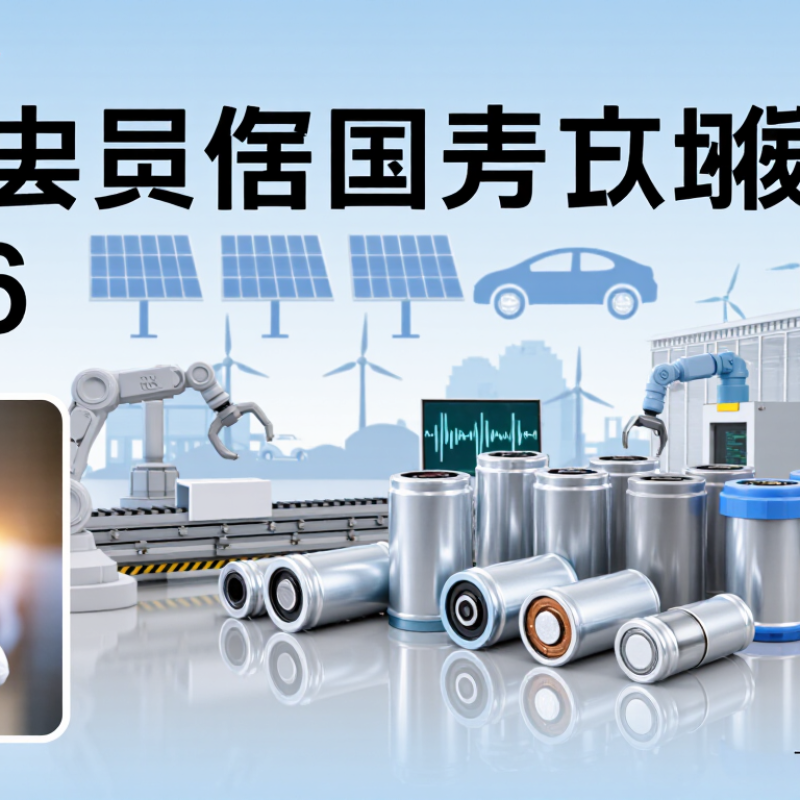
China Top Metallized Film Capacitor Manufacturers 2026

China’s metallized film capacitor industry is entering a more demanding phase in 2026. Metallized Film Capacitors support inverters, electric vehicles, solar systems, wind converters, and industrial drives. Their thin metal layers, self-healing behavior, and low-loss performance remain highly valuable.

MarketsandMarkets’ Film Capacitor Market report identifies renewable energy, electric mobility, and power electronics as major growth drivers. Grand View Research reports similar expansion, while emphasizing rising demand for compact, high-temperature components. However, market estimates differ between research firms. That difference deserves attention. Definitions, regional coverage, and automotive data can change the final numbers.

Dr. Frede Blaabjerg, a leading power-electronics researcher, has stated, “Reliability is becoming increasingly important in power electronics.” His point applies directly to Chinese manufacturers. A capacitor may look simple on a production line. It is not. Film thickness, metallization uniformity, winding tension, edge insulation, and thermal testing can decide field performance. A small defect may appear months later inside a hot inverter cabinet.

This guide examines China’s leading manufacturers through product capability, testing discipline, certification, delivery experience, and application knowledge. It will consider DC-link, snubber, AC filtering, and customized capacitor designs. Price alone is insufficient. Sometimes, the cheapest specification hides the highest lifecycle cost. Suppliers also deserve closer questioning about aging tests, raw-film traceability, and failure analysis. No ranking is perfect, but transparent criteria can make comparison more useful.

China Top Metallized Film Capacitor Manufacturers 2026

Metallized Film Capacitors: 1–12 μm Films and Self-Healing Design

Metallized film capacitors rely on extremely thin polymer films, typically between 1 and 12 μm. This range reduces volume while preserving useful voltage performance. According to Grand View Research, the global film capacitor market is projected to expand steadily through 2030, supported by electric vehicles, renewable energy, and power electronics. These applications demand compact components with predictable losses and long service life.

A metallized layer is usually only a fraction of a micrometer thick. When a local dielectric defect causes a breakdown, the surrounding metal vaporizes and isolates the damaged spot. This self-healing action helps the capacitor continue operating, often with a small capacitance reduction. It is not magic. Repeated events, excessive humidity, or poor edge protection can still shorten working life. IEC 60384-based testing therefore examines capacitance, dissipation factor, insulation resistance, and endurance under defined electrical stress.

Manufacturers serving China’s 2026 market are increasingly evaluated by process control, not appearance alone. Film thickness uniformity, winding tension, metallization adhesion, and zinc-free edge margins require measurable inspection. A thinner 1 μm film can improve energy density, but it leaves less tolerance for defects and handling damage. That trade-off is easy to underestimate. Reports from MarketsandMarkets also identify electrification and grid investment as major demand drivers for film capacitors. However, published market estimates vary by product scope, so buyers should check test conditions, pulse capability, and self-healing behavior before comparing specifications.

China Top Metallized Film Capacitor Manufacturers 2026 - Metallized Film Capacitors: 1–12 μm Films and Self-Healing Design

Technical market-reference table for common metallized polymer-film capacitor constructions; values are typical industry ranges and may vary by dielectric, voltage class, geometry, and applicable standard.

Technical Dimension Typical Range or Specification Technical Description Main Performance Benefit Common Application Area
Film Thickness 1–12 μm Polypropylene and polyester dielectric films are selected according to voltage, capacitance density, pulse stress, and mechanical requirements. Thinner films support higher volumetric capacitance; thicker films generally provide greater voltage and mechanical margin. DC-link, snubber, EMI suppression, energy storage
Primary Dielectric Materials Polypropylene (PP); polyester (PET) PP offers low dielectric loss and strong electrical performance, while PET provides higher dielectric constant and compact construction. Material selection balances loss, size, temperature capability, and cost. Power electronics, motor drives, industrial controls
Metallization Material Aluminum or zinc-aluminum alloy, typically vacuum deposited A very thin metal layer is deposited on the polymer film to form the electrodes while keeping the component lightweight and compact. Compared with foil electrodes, metallization reduces mass and enables self-healing behavior. General-purpose and power-film capacitors
Self-Healing Function Localized dielectric fault clearing When a localized breakdown occurs, the fault current vaporizes the nearby metallization, electrically isolating the damaged spot without destroying the entire winding. Improves operational reliability and allows continued service after minor localized defects. DC-link, AC filtering, lighting, industrial equipment
Capacitance Tolerance Commonly ±5% or ±10% Actual tolerance depends on the capacitor series, dielectric system, rated voltage, and customer specification. Supports circuit tuning, filtering accuracy, and replacement compatibility. Power conversion, control circuits, EMI filters
Rated Voltage Classes Approximately 63 VDC to 2,000 VDC; higher ratings available in specialized designs Rated voltage is determined by dielectric thickness, metallization pattern, winding design, insulation system, and safety margin. Provides design options from low-voltage electronics to high-voltage DC-link systems. Inverters, photovoltaic systems, EV powertrains, industrial drives
AC Rated Voltage Typically from 100 VAC to 1,000 VAC depending on construction AC-rated capacitors must account for RMS current, peak voltage, frequency, temperature rise, and repetitive pulse stress. Suitable for AC filtering, power-factor correction, and suppression networks. Motor drives, UPS systems, grid-connected converters
Operating Temperature Common ranges: −40°C to +85°C; −40°C to +105°C; selected designs up to +125°C Temperature capability depends on film type, winding structure, encapsulation, internal hot-spot temperature, and lifetime requirements. Enables use in equipment exposed to ambient temperature variation and thermal cycling. Automotive electronics, renewable energy, factory automation
Dissipation Factor Typically below 0.1% for polypropylene designs at reference conditions Dissipation factor varies with frequency, temperature, dielectric material, and manufacturing structure; PET designs generally have higher loss than PP. Lower loss reduces heat generation and improves high-frequency efficiency. High-frequency converters, resonant circuits, pulse applications
Insulation Resistance Commonly specified in the GΩ range or by RC product requirements Insulation resistance is evaluated after charging under defined conditions and is influenced by film quality, moisture, temperature, and construction. Reduces leakage current and supports stable long-term electrical performance. DC-link storage, precision filtering, instrumentation
High-Frequency Current Capability Application-specific; determined by RMS current, frequency, ESR, and thermal design Current capability is not defined by capacitance alone. Internal losses, terminal design, winding dimensions, cooling, and ambient conditions must be considered. Supports reliable operation under switching ripple and repetitive current pulses. IGBT and SiC inverters, welding equipment, induction heating
Construction Formats Radial leaded, axial leaded, box-type, cylindrical, flat-wound, and busbar-mounted Form factor and terminal layout are customized for PCB mounting, chassis mounting, low-inductance connections, or high-current busbars. Improves installation flexibility and helps reduce parasitic inductance. PCB assemblies, converter cabinets, traction systems
Safety and Flame Protection Design-dependent; may include flame-retardant encapsulation and pressure-interrupt devices Safety-related construction is selected according to application risk, operating voltage, fault behavior, and the relevant capacitor standard. Improves fault containment and application safety when correctly specified. AC mains suppression, lighting, appliances, industrial equipment
Reference Standards IEC 60384-1; IEC 61071; IEC 60384-14; UL and national requirements where applicable The applicable standard depends on whether the component is used for electronic equipment, power electronics, or across-the-line and line-to-ground suppression. Provides a framework for electrical, mechanical, environmental, and endurance testing. Global procurement, qualification, and compliance programs
Typical Quality Tests Capacitance, dissipation factor, insulation resistance, voltage proof, self-healing behavior, temperature cycling, endurance Production and qualification tests are selected according to the product specification and applicable standard. Helps verify consistency, electrical safety, durability, and suitability for the intended duty cycle. Incoming inspection, production control, reliability validation
Data note: The ranges above are general technical reference values for metallized film capacitors and are not company-specific rankings or manufacturer quotations. Final selection should be based on the complete datasheet, operating waveform, RMS current, ambient temperature, mounting conditions, required lifetime, and applicable safety standard.

Key Materials: BOPP Dielectrics, 0.1–3% Loss, and High Voltage Stability

China Top Metallized Film Capacitor Manufacturers 2026

Key Materials: BOPP Dielectrics, 0.1–3% Loss, and High Voltage Stability

BOPP, or biaxially oriented polypropylene, remains a core dielectric for reliable metallized film capacitors. Its low moisture absorption supports stable insulation in demanding environments. For 2026 sourcing, engineers should examine loss values between 0.1% and 3% under stated frequency and temperature conditions. A single number can mislead. High voltage stability also depends on film thickness, metallization resistance, winding tension, and edge construction. In practical evaluations, impulse tests, thermal cycling, and long-duration voltage tests reveal weaknesses that normal capacitance checks may miss. A neat datasheet is not enough.

Tips: Request raw test conditions. Check capacitance drift after heat exposure. Review batch traceability, electrode uniformity, and self-healing behavior. Small details matter.

Experienced buyers should compare production controls, not only quoted prices. Clean winding areas reduce particles and insulation defects. Controlled metallization helps balance low loss with dependable self-healing. However, thinner films are not automatically better; they may reduce size while narrowing voltage margins. I have seen specifications look impressive until humidity testing exposed unstable performance. That lesson deserves attention. Ask for third-party reports, sampling plans, and failure analysis records before approving a manufacturer. Reliable suppliers explain limitations clearly and provide repeatable data across production batches.

Quality Benchmarks: IEC 61071, ±5% Tolerance, and 10,000-Hour Life Tests

China’s leading metallized film capacitor manufacturers in 2026 should be judged by measurable quality, not catalog promises. IEC 61071 testing provides a practical foundation for power electronic capacitors. It addresses electrical performance, safety, and endurance under defined conditions. Buyers should request test records, sample identification, and production traceability.

A ±5% capacitance tolerance is a useful benchmark for stable circuit design. Inspect samples at room temperature, then repeat measurements after thermal exposure. Small deviations can reveal weak metallization control.

Look for low dissipation factor, consistent insulation resistance, and secure terminals. Details matter.

A serious supplier should also support 10,000-hour life testing. The test conditions must be stated clearly, including voltage, temperature, ripple current, and failure criteria. “10,000 hours” means little without this information. Production samples should come from normal batches, not specially prepared units. That distinction is often overlooked.

Practical audits may include winding inspection, humidity testing, and accelerated aging. Ask how failures are recorded and corrected. A polished report is not proof by itself. Some evaluations still rely too heavily on appearance and price. That approach needs reconsideration.

Reliable manufacturers connect IEC 61071 evidence with process controls, batch data, and repeatable inspection results.

How to Compare Chinese Manufacturers by 1–100 kVAr Power Ratings

China Top Metallized Film Capacitor Manufacturers 2026

When comparing Chinese manufacturers from 1 to 100 kVAr, keep voltage and frequency identical. A 25 kVAr unit at 400 V is not directly comparable with one rated at 440 V. Reactive output follows

Q = 2πfCV²

so voltage strongly changes performance. Request test data at 400 or 415 V and 50 Hz. IEC 60831-1:2014 emphasizes self-healing behavior, discharge safety, capacitance tolerance, and thermal endurance for low-voltage shunt capacitors. These points matter more than a polished catalogue.

1–10 kVAr

10–30 kVAr

30–60 kVAr

60–100 kVAr

Divide suppliers into practical rating bands: 1–10, 10–30, 30–60, and 60–100 kVAr. Check loss angle, internal pressure protection, discharge time, and maximum operating temperature. For outdoor panels, ask for humidity and salt-mist evidence.

The IEA Electricity 2024 report expects global electricity demand to grow by about 3.4% annually through 2026, increasing pressure on efficient power-factor correction equipment.

Manufacturing scale alone does not prove reliability. A factory should provide routine-test records, batch traceability, and measured capacitance from recent production. I would also inspect film thickness, winding tension, terminal welding, and enclosure sealing. A neat sample can still hide inconsistent production.

This comparison is imperfect. Keep margin for temperature, harmonics, and installation errors. One overlooked harmonic current can shorten capacitor life.

2026 Applications: EV Inverters, Solar Systems, and 10–100 kHz Switching_freq

China Top Metallized Film Capacitor Manufacturers 2026

2026 Applications: EV Inverters, Solar Systems, and 10–100 kHz Switching Frequency

China’s leading metallized film capacitor manufacturers are developing components for faster power conversion. In EV inverters, capacitors support DC-link stability during rapid torque changes. They must handle high ripple current, steep dv/dt, vibration, and repeated thermal cycling. A compact case is useful, but internal temperature matters more.

Solar inverters create different stress patterns. Daytime heat, grid fluctuations, and long operating hours can accelerate insulation aging. At 10–100 kHz switching frequencies, losses and self-healing behavior deserve close attention. Engineers should compare capacitance stability, equivalent series resistance, partial-discharge performance, and expected service life. Ask for ripple-current curves at actual temperatures. Testing should match the installation, not only room conditions.

Tips: Request production samples and detailed test records. Check film thickness, spray-metal quality, sealing methods, and thermal limits. Verify applicable IEC requirements independently. Some suppliers present excellent headline data, yet omit high-frequency loss figures. That gap matters. I would also inspect end-of-life testing, because a capacitor can pass initial checks and still age unevenly. Leave design margin for heat, voltage spikes, and manufacturing variation. Perfect specifications rarely survive real cabinets.

Kontaktbox-Frau

  • CNC-STEP – Quick contact