



What Is a Saudi Freight Forwarder and How Does It Work?
A Saudi Freight Forwarder connects exporters, importers, carriers, customs brokers, warehouses, and delivery teams across Saudi Arabia. It does not simply move boxes from one address to another. It plans the shipment, checks documentation, selects transport modes, monitors cargo, and coordinates final delivery. A container may leave Jeddah Islamic Port, pass through a distribution center, and reach a retailer in Riyadh. Air freight may follow a different route through King Khalid International Airport.
Saudi logistics consultant Eng. Fahad Al-Ghamdi describes the role this way: “A reliable forwarder turns a complicated shipment into a controlled sequence of practical decisions.” That statement captures the industry’s real value. A professional Saudi Freight Forwarder reviews commercial invoices, packing lists, certificates, delivery terms, and applicable customs requirements before cargo moves. It may also arrange cargo insurance, temperature-controlled handling, warehousing, and shipment tracking. Small details matter. A missing product description can create avoidable delays.
The process is not always elegant. Port congestion, inaccurate weights, changing schedules, or unclear responsibilities can disrupt even well-planned shipments. That uncertainty deserves attention. Experienced forwarders reduce risk through early communication, documented procedures, and realistic delivery estimates. They also understand regional infrastructure, business practices, and transport connections between ports, airports, industrial cities, and inland markets. However, no forwarder can eliminate every delay. Shippers must provide accurate information and review service terms carefully. This guide explains how a Saudi Freight Forwarder works, what services it provides, and which practical questions businesses should ask before choosing one.
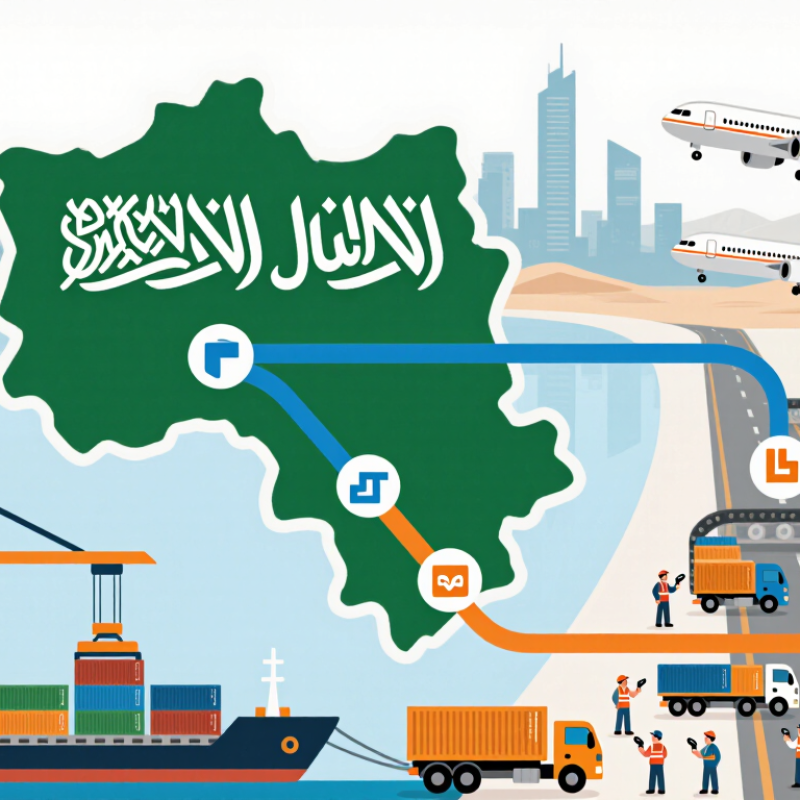
Definition and Role of a Saudi Freight Forwarder
A Saudi freight forwarder coordinates the movement of goods on behalf of an exporter or importer. It connects the shipper with carriers, customs brokers, warehouses, and other service providers. Depending on the shipment, it may arrange sea, air, road, or multimodal transport. Its role is coordination, not necessarily owning the ships or trucks.
The work often starts with shipment details: cargo dimensions, weight, origin, destination, and delivery deadline. The forwarder then compares routing options, books space, prepares transport documents, and tracks milestones. For a container leaving Jeddah, for example, this can mean aligning truck collection, port handling, vessel schedules, and onward delivery. UNCTAD reports that maritime transport carries over 80% of world trade by volume, making reliable port coordination central to many international shipments. Schedules can still change.
In Saudi Arabia, a forwarder can also help clients navigate shipment procedures and coordinate required documentation with relevant parties. The exact tasks depend on the cargo, route, and agreed service scope; the shipper remains responsible for providing accurate information. A useful forwarder explains costs and handoffs clearly, rather than promising every delay can be prevented. Small errors matter. A mismatched weight or late document can hold up a shipment, so experienced teams check details before cargo moves. Source: UNCTAD, Review of Maritime Transport 2024.
What Is a Saudi Freight Forwarder and How Does It Work? - Definition and Role of a Saudi Freight Forwarder
| Data Dimension | Key Information | Practical Explanation |
|---|---|---|
| Definition | Logistics intermediary | A Saudi freight forwarder arranges the movement of cargo on behalf of an importer, exporter, or other customer. It coordinates transport, documentation, cargo handling, and delivery without necessarily operating the aircraft, vessel, truck, or warehouse itself. |
| Primary Function | End-to-end shipment coordination | The forwarder connects shippers with carriers and logistics providers, plans the shipment route, selects suitable transport services, monitors progress, and coordinates the handover of cargo between different parties. |
| Common Transport Modes | Sea, air, road, rail, and multimodal transport | Sea freight is commonly used for large or non-urgent shipments, air freight for time-sensitive cargo, road freight for regional and domestic distribution, and multimodal transport when more than one mode is required. |
| Saudi Entry Points | Seaports, airports, and land border crossings | Shipments may enter Saudi Arabia through maritime ports, international airports, or land borders. The appropriate entry point depends on the cargo origin, destination, transport mode, urgency, and available service route. |
| Shipment Planning | Route, schedule, capacity, and cost planning | The forwarder compares available routing options and coordinates pickup dates, cargo readiness, transit arrangements, connection points, and final delivery requirements before the shipment is dispatched. |
| Booking Responsibilities | Carrier and service reservations | The forwarder books vessel, aircraft, truck, or other transport capacity based on the shipment details, including cargo type, dimensions, weight, origin, destination, requested delivery time, and agreed trade terms. |
| Documentation | Commercial and transport documents | Typical documents include a commercial invoice, packing list, transport document, certificate of origin when required, import or export permits when applicable, and cargo-specific certificates or approvals. |
| Customs Coordination | Support with customs declarations and clearance | A forwarder can prepare or coordinate customs information, classification details, supporting documents, duty and tax information, inspections, and release procedures. Customs declarations must follow the requirements of the relevant Saudi authorities and authorized parties. |
| Saudi Customs Environment | Electronic customs and trade compliance processes | Importers and exporters must comply with Saudi customs, taxation, product, and trade-control requirements. The forwarder helps organize shipment data and documents, but the importer or exporter remains responsible for the accuracy and legality of the transaction. |
| Product Compliance | Regulated and restricted goods checks | Food, pharmaceuticals, chemicals, telecommunications equipment, cosmetics, vehicles, dangerous goods, and other controlled products may require additional approvals, labeling, permits, or technical documentation before clearance. |
| Cargo Handling | Pickup, consolidation, storage, and transfer | Depending on the service, the forwarder may arrange collection from the supplier, cargo consolidation, temporary storage, container loading, terminal transfer, deconsolidation, and delivery to the consignee or distribution facility. |
| Incoterms® Coordination | Allocation of cost, risk, and responsibility | The agreed Incoterms® rule clarifies which party arranges transport, insurance, export procedures, import procedures, and delivery. The forwarder uses the agreed rule to determine the required operational steps and service scope. |
| Freight Consolidation | Combining smaller shipments | Less-than-container-load or groupage services combine cargo from different shippers into one transport unit. This can improve space utilization and may reduce the transport cost for smaller consignments, subject to handling and transit requirements. |
| Shipment Tracking | Status updates and exception management | The forwarder tracks milestones such as pickup, departure, transshipment, arrival, customs status, release, and final delivery. It also communicates delays, inspections, documentation issues, or changes in the transport plan. |
| Cost Components | Freight, handling, clearance, storage, and delivery charges | A shipment quotation may include the main freight charge, origin and destination handling, documentation, customs-related service fees, terminal charges, storage, delivery, insurance, duties, and taxes. The exact items depend on the route and service terms. |
| Insurance Support | Optional cargo insurance arrangement | A forwarder may help arrange cargo insurance or explain available coverage. Insurance scope, exclusions, declared value, claims procedures, and applicable conditions should be reviewed before shipment dispatch. |
| Dangerous Goods | Special handling and transport compliance | Dangerous goods require accurate classification, packaging, marking, labeling, documentation, and carrier acceptance. The shipper must provide complete and correct product information before booking. |
| Warehouse Services | Short-term storage and distribution support | Depending on the service arrangement, a forwarder may coordinate receiving, inventory holding, palletization, labeling, order preparation, cross-docking, and onward distribution within Saudi Arabia. |
| Delivery Stage | Final-mile transport to the consignee | After cargo release, the forwarder coordinates local transportation, delivery appointments, unloading requirements, proof of delivery, and the return of reusable transport equipment when applicable. |
| Customer Responsibilities | Accurate information and timely documents | The customer must provide correct product descriptions, values, quantities, weights, dimensions, origin information, permits, and consignee details. Incomplete or inaccurate information can cause delays, extra costs, penalties, or shipment rejection. |
| Typical Workflow | Quote → booking → pickup → transport → clearance → delivery | The normal process begins with shipment details and a quotation, followed by booking and cargo pickup. The shipment then moves through the selected transport network, customs procedures, release, and final delivery. |
| Selection Criteria | Compliance capability, network, visibility, and service fit | When selecting a forwarder, compare knowledge of Saudi import procedures, experience with the relevant cargo type, transport options, documentation support, tracking capability, service coverage, insurance arrangements, and transparent pricing. |
Note: Customs, product-approval, duty, tax, and documentation requirements vary according to the cargo, origin, destination, and applicable Saudi regulations. Requirements should be confirmed before shipment.