



Top Belt Conveyor Roller Manufacturers Worldwide
Choosing reliable Belt Conveyor Roller Manufacturers requires more than comparing prices or browsing polished product pages. A conveyor roller may look simple, yet its diameter, bearing design, shell thickness, and sealing system affect an entire material-handling line. In mining, ports, warehouses, and aggregate plants, small roller failures can create loud vibration, belt misalignment, and costly downtime. The best manufacturers understand these working conditions through engineering experience and consistent field testing.
This guide examines leading manufacturers worldwide through practical criteria. We consider product quality, manufacturing capacity, technical documentation, customization, delivery reliability, and after-sales support. Materials matter. A painted steel roller may suit a dry warehouse, while galvanized or stainless steel can better resist moisture and corrosion. Bearing protection is equally important when dust enters every exposed gap. Not every supplier publishes enough test data, however. That limitation deserves attention.
Real performance depends on more than brand reputation. Roller runout, balancing accuracy, load rating, and maintenance access should match the conveyor’s speed and duty cycle. Ask for measurable specifications. Request samples when possible. A clean factory tour can also reveal production discipline, inspection routines, and storage practices. Still, even respected manufacturers may have regional weaknesses or inconsistent communication. This overview aims to provide a balanced starting point for procurement teams, engineers, and distributors. It highlights proven capabilities while acknowledging uncertainty, because dependable conveyor decisions require evidence, not attractive claims.
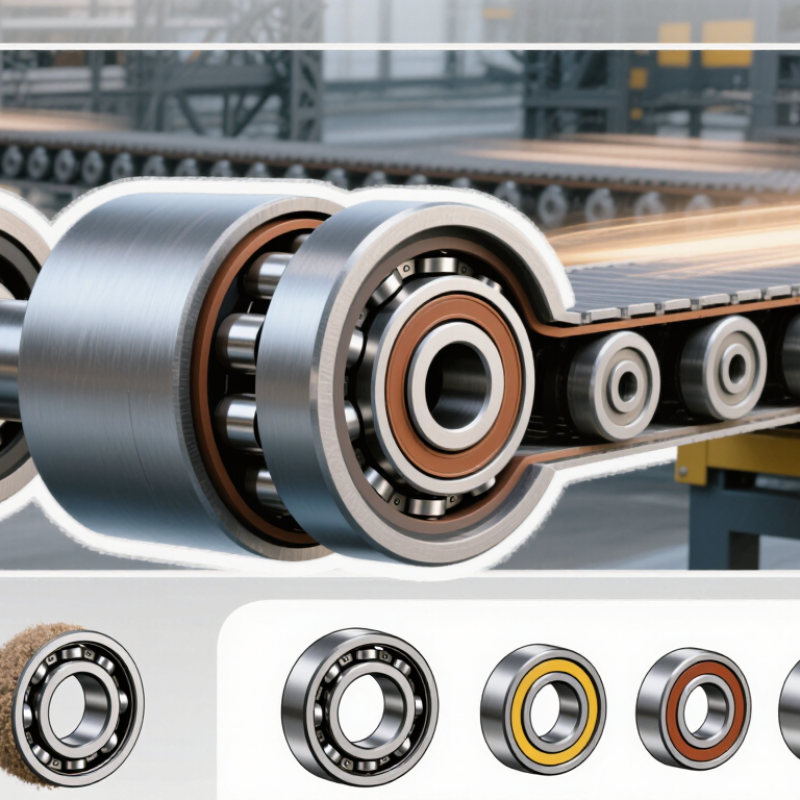
Belt Conveyor Rollers: Types, Components, and Operating Principles
Belt conveyor rollers support the belt, cargo, and return run. Carrying rollers usually sit in three-roller or five-roller idler sets. Impact rollers use rubber discs beneath loading zones. Return rollers support the empty belt underneath. Self-aligning rollers help correct tracking, but they cannot repair poor installation. The main components include a steel or polymer shell, shaft, bearings, seals, and mounting brackets. Each part affects resistance, noise, and service life. Grand View Research valued the global conveyor belt market at about USD 5.8 billion in 2023, showing the scale of equipment demand across mining, logistics, and manufacturing.
The operating principle is simple. A motor turns the drive pulley, and friction moves the belt over rotating rollers. Correct roller spacing reduces sag and limits belt tension. CEMA conveyor design guidance links roller selection with belt load, speed, material density, and trough angle. ISO 1537 also addresses conveyor construction and safety-related design considerations. Still, field conditions are rarely perfect. Dust enters seals. Wet material accelerates corrosion. A roller may look sound while its bearing quietly overheats.
Tips: Measure belt speed, load, and ambient temperature before selecting rollers. Check bearing noise during a shutdown inspection. Keep spare seals available. Polymer rollers can reduce weight, but their temperature limits need verification. Never assume a larger roller is automatically better. A small alignment error can produce a large tracking problem. Review inspection records, not only purchase specifications.

How to Evaluate Belt Conveyor Roller Manufacturers
A conveyor roller can look sound on a catalog page. The details show whether it suits your operating conditions. Ask manufacturers for dimensions, load ratings, shell thickness, shaft specifications, and bearing arrangements. Check that their recommendations match your belt width, speed, material, and working environment. Dust, moisture, and frequent washdowns can change which seals and finishes are appropriate.
Request inspection records and test methods, not just broad quality claims. Useful checks may include roller runout, rotation resistance, noise, and bearing temperature under defined conditions. Ask how samples are measured and whether production batches are checked consistently. A clear answer matters. Vague specifications make comparisons difficult. If possible, inspect a sample and listen for roughness while turning it by hand. This is not a substitute for testing, but it can reveal obvious issues.
Also assess communication and replacement support. Ask about tolerances, packaging, lead times, and how the supplier handles defects. Confirm that drawings and material details are available for review before an order. Experience in a similar application is helpful, though it does not guarantee a perfect fit. I would not choose on price alone; still, the most expensive option is not automatically better. Compare evidence, operating needs, and realistic service expectations.
Top Belt Conveyor Roller Manufacturers Worldwide - How to Evaluate Belt Conveyor Roller Manufacturers
| Evaluation Dimension | What to Compare | Evidence to Request | Practical Evaluation Cue |
|---|---|---|---|
| Application and product range | Availability of carrying, return, impact, and self-aligning idlers, plus options for different belt widths, loads, speeds, and operating environments. | Product drawings, dimensional schedules, load-rating information, and a written confirmation that the proposed roller suits the conveyor duty. | Check that the supplier evaluates the operating conditions rather than recommending a roller based on belt width alone. |
| Dimensions and interchangeability | Roller length, shell diameter, shaft dimensions, end configuration, and compatibility with the existing idler frame. | Dimensioned drawings showing tolerances, shaft ends, bearing arrangement, and interfaces with the customer’s frame. | Confirm critical dimensions against the installed equipment before ordering; similar-looking rollers may not be interchangeable. |
| Bearings and sealing | Bearing type and size, lubrication method, seal design, and suitability for dust, moisture, temperature, and washdown exposure. | Component specifications, seal construction details, lubrication guidance, and relevant test reports. | Look for evidence that bearing and seal choices match the actual site conditions. Do not treat a stated IP rating as verified unless supported by testing to the applicable IEC 60529 requirements. |
| Roller performance and testing | Rotational resistance, runout, noise, balance, and performance under the intended load and operating conditions. | Documented test methods, inspection records, acceptance limits, and sample test results for the offered product. | Compare results only when the test method, sample condition, and acceptance criteria are clearly stated. |
| Materials and corrosion protection | Shell and shaft materials, surface finish, coating or galvanizing system, and suitability for corrosive or abrasive environments. | Material specifications, coating details, and inspection or test records relevant to the specified finish. | Assess the proposed materials against the site environment; a coating description alone does not establish service life. |
| Manufacturing quality control | Control of incoming materials, machining, welding or assembly, dimensional inspection, and product traceability. | Quality-control plan, inspection records, traceability examples, and the scope and site coverage of any ISO 9001 certification. | Verify that certificates and records apply to the manufacturing location and product scope being quoted. |
| Standards and compliance | Applicable customer, project, and jurisdictional requirements, including any required material or environmental documentation. | A compliance matrix identifying each requirement and the supporting certificate, test report, or declaration. | Check that each claimed standard or certification is relevant to the supplied product and is current for the project. |
| Reliability and service support | Warranty terms, replacement-part availability, technical assistance, and the process for handling quality claims. | Written warranty conditions, support contacts, spare-parts policy, and examples of service or corrective-action procedures. | Compare the terms and response process in writing; avoid relying on general claims of long service life. |
| Production capacity and delivery | Manufacturing capacity, standard and custom lead times, order flexibility, packaging, and export or local delivery arrangements. | Current production schedule, quoted lead time, packaging details, and shipping documentation requirements. | Confirm lead times for the specific configuration and quantity, not just for standard products. |
| Total cost and lifecycle value | Unit price, freight, installation compatibility, maintenance needs, expected replacement access, and warranty exclusions. | Itemized quotation, operating and maintenance guidance, and clearly stated commercial terms. | Compare equivalent specifications and consider the cost of inspection, replacement, and downtime as well as purchase price. |
Note: Roller specifications and acceptance limits depend on conveyor design, materials handled, operating conditions, and project requirements. Confirm technical details with the equipment designer or responsible engineer before purchase.
Leading Belt Conveyor Roller Manufacturers by Region
Top Belt Conveyor Roller Manufacturers Worldwide
Leading belt conveyor roller manufacturers differ by region, application, and purchasing priorities. MarketsandMarkets reports that the global conveyor systems market could grow from about USD 7.7 billion in 2023 to USD 10.6 billion by 2028. This expansion increases demand for rollers with lower friction, better sealing, and longer service intervals. Asia-Pacific remains a major production center, supported by mining, ports, logistics, and large manufacturing projects. Buyers often compare shell runout, bearing protection, noise levels, and delivery capacity.
Europe is recognized for engineering control and strict testing practices. Regional manufacturers commonly focus on energy efficiency, corrosion resistance, and traceable quality procedures. In heavy-duty sites, roller design may include labyrinth seals, reinforced shafts, and impact-resistant shells. North American suppliers often emphasize application engineering and replacement support. Their rollers serve bulk terminals, aggregate plants, warehouses, and demanding overland conveyors. ASTM and CEMA guidance can help buyers compare dimensions and operating requirements, although standards do not replace field testing.
The Middle East, Africa, and Latin America show strong demand for rollers used in hot, dusty, and remote environments. Reports from Grand View Research identify infrastructure, mining, and material handling as important growth drivers for conveyor equipment. A good regional supplier should provide load calculations, temperature ranges, seal specifications, and documented inspection results. Cheap rollers can become expensive quickly. That assumption is not always correct. Regional rankings also remain imperfect because output volume may hide differences in service life, local support, and failure records. Test data matters more than polished brochures.
Manufacturing Standards, Materials, and Quality Assurance
Top Belt Conveyor Roller Manufacturers Worldwide
Manufacturing standards matter because rollers face constant impact, dust, and uneven loads. A reliable manufacturer should document tube dimensions, shaft tolerances, bearing fit, and runout limits. These details help rollers track smoothly and reduce belt vibration. Ask how measurements are checked, not just which standard is named. A certificate alone cannot show how a roller performs after months of service.
Materials shape durability. Steel tubes suit many heavy-duty lines, while polymer components can help where corrosion or noise is a concern. Seals deserve close attention: poor sealing lets fine dust reach bearings, where it can cause heat and premature wear. Quality assurance may include incoming material checks, weld inspection, rotation testing, and sampling from each production batch. No process catches everything. That is worth remembering.
Tips: Request test records for the roller size and operating conditions you actually use. Check shaft ends and seals on delivered samples, and compare noise during free rotation. A quick check helps, but field performance can still differ when installation, load, or maintenance changes.
Top Belt Conveyor Roller Manufacturers Worldwide — Manufacturing Standards, Materials, and Quality Assurance
Typical material densities for common conveyor roller shell materials. Lower density can reduce roller mass; material choice also depends on load, corrosion, wear, and operating conditions.
Indicative typical values: HDPE 0.95 g/cm³, aluminum 2.70 g/cm³, and carbon steel 7.85 g/cm³. Actual density varies by grade and formulation. This material comparison is not a manufacturer ranking or a quality certification.
Applications and Trends Shaping the Global Roller Industry
Belt conveyor rollers work in settings that rarely look alike. A quarry may move abrasive stone, while a food plant needs cleanable equipment and controlled product contact. Warehouses often prioritize quiet operation and smooth parcel flow. These differences shape roller diameter, shell material, bearing protection, and spacing. Dust changes everything. On a site visit, technicians may find that a roller that turns freely in a workshop binds quickly near fine mineral dust. That gap between test conditions and daily use matters when selecting equipment.
Across the global roller industry, buyers increasingly consider energy use, maintenance access, and monitoring alongside purchase price. Low-resistance bearings can help reduce belt drag, but their value depends on correct alignment and suitable loading. Sensors can flag unusual vibration or temperature before a seized roller damages the belt. Yet monitoring is not a substitute for inspection; alarms need clear thresholds and a person who can act on them. Recycled materials and longer service intervals are also gaining attention, though performance claims should be checked against operating conditions. A sensible specification starts with the actual load, speed, environment, and maintenance capacity—not a trend alone.
Article Source:
Siemensstraße 13-15
47608 Geldern
NRW Deutschland
Mail: sale@atmmachinesolutions.com
Head office:
+49 (0) 2831 91021-20
Fax:
+49 (0) 2831 91021-99
SUPPORT and INFO
from 3 p.m. to 6 p.m:
+49 (0) 2831 91021-60
( please ring for a long time )
Monday to Friday
8.00 – 12.30
and 13.00 – 15.00
Visit / collection by appointment only!
➣ Sign up for our newsletter
Benefit from a 20% discount, don’t miss any events and always stay up to date.
To access the actual content, click on the button below. Please note that data will be passed on to third-party providers.
More information