What is an Industrial PC and Why is it Important?
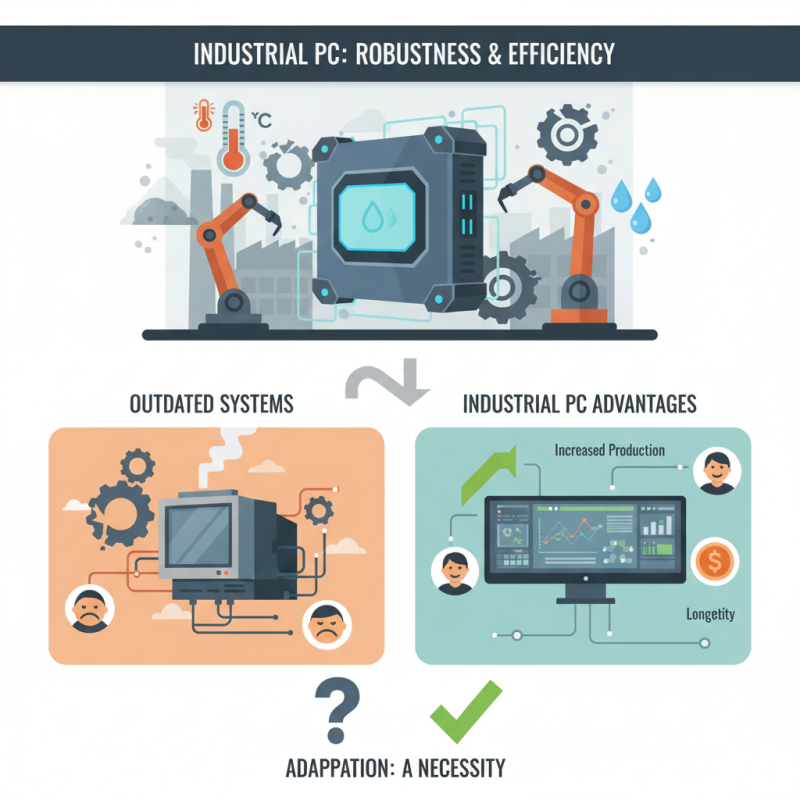
Industrial PCs have become essential in various manufacturing environments. Dr. Emily Chen, a renowned expert in automation technology, states, "The robustness of an Industrial PC can significantly enhance production efficiency." This assertion highlights the importance of this technology in industrial settings.
Industrial PCs are designed to withstand harsh conditions that standard computers cannot endure. They operate effectively in extreme temperatures and resist dust and moisture. Industries rely on these systems to monitor processes, control machines, and manage data. The durability of an Industrial PC makes it a worthwhile investment for businesses focused on longevity.
However, it's crucial to question whether industries are leveraging the full potential of Industrial PCs. Some organizations may overlook their importance, sticking to outdated systems. This can result in inefficiencies and lost opportunities. Adapting to new technologies is not just an option; it's a necessity in today's fast-paced landscape.
Definition of an Industrial PC and Its Key Features
An Industrial PC (IPC) is a specialized computer designed for use in harsh environments. Unlike standard PCs, IPCs are built to endure extreme temperatures, vibrations, and dust. This ruggedness makes them essential in sectors like manufacturing, automation, and transportation. The design of an IPC often features reinforced chassis and better cooling systems, allowing them to operate reliably where traditional computers fail.
Key characteristics of Industrial PCs include extended temperature ranges and enhanced connectivity options. Many IPCs support various input and output interfaces, facilitating integration with numerous devices. They often incorporate fanless designs to minimize dust accumulation, contributing to longevity. Furthermore, software compatibility is crucial. Industrial PCs usually run on robust operating systems tailored for real-time processing. Such systems are vital for managing complex operations efficiently.
Despite their advantages, using IPCs can pose challenges, such as higher initial costs and limited customization options compared to standard PCs. Organizations must weigh these factors against the reliability and durability an IPC offers. Ensuring the right fit for specific applications requires careful assessment of both environment and operational needs.
Comparison Between Industrial PCs and Standard Computers
Industrial PCs, or IPCs, differ significantly from standard computers in terms of design and functionality. IPCs are built for harsh environments. They can endure extreme temperatures, dust, and vibration. In factories, these features are essential. A standard office computer cannot withstand such conditions. In contrast, IPCs often have sealed enclosures. This helps them avoid damage from industrial elements.
Performance is another area of distinction. While standard computers perform basic tasks well, IPCs handle complex operations. They run real-time applications and connect with various machines. This level of reliability is crucial for production processes. Moreover, IPCs often have extended service life. Users may find standard computers becoming outdated quickly. On the other hand, IPCs can support legacy systems, ensuring compatibility with older technology.
Despite their advantages, IPCs are not without drawbacks. They can be more expensive initially. Users must weigh the long-term benefits against the upfront costs. Additionally, setting up an IPC can require specific expertise. This may lead to reliance on skilled technicians. For businesses, it's important to evaluate these factors carefully. Choosing between IPCs and standard computers is not always straightforward.
What is an Industrial PC and Why is it Important? - Comparison Between Industrial PCs and Standard Computers
| Feature | Industrial PC | Standard PC |
| Durability | High resistance to shock, vibration, and extreme temperatures | Standard components with limited durability |
| Power Supply | Wide voltage range and often fanless designs | Standard power supply; may require a cooling system |
| Longevity | Designed for longer life cycles (5-10 years) | Typically 3-5 years |
| Customizability | Highly customizable for specific industrial applications | Limited customization options |
| Connectivity Options | Enhanced interfaces (serial, parallel, digital I/O, etc.) | Standard connectivity (USB, HDMI, etc.) |
| Cost | Generally higher due to specialized components | Lower initial cost |
Applications of Industrial PCs in Various Industries
Industrial PCs (IPCs) play a crucial role across various industries, offering robust solutions tailored for harsh environments. In manufacturing, IPCs facilitate automation and control processes. They enable real-time data analysis, improving efficiency. Reports indicate that over 70% of manufacturers utilize IPCs to enhance production reliability. These devices withstand extreme temperatures and vibrations. This resilience is essential for optimizing operations.
In the energy sector, IPCs monitor and control equipment in real-time. They handle vast amounts of data from sensors and devices on-site. A report by the International Energy Agency suggests that digital technologies, including IPCs, could reduce operational costs by up to 20%. This capability transforms how energy companies function, making processes safer and more efficient.
The transportation sector also benefits significantly from IPCs. They manage systems in vehicles and infrastructure. For example, in smart traffic systems, IPCs analyze data to optimize traffic flow. A study showed that cities incorporating IPCs in their traffic management saw a 30% reduction in congestion. These devices are essential in achieving effective solutions. However, challenges remain in integrating IPCs with legacy systems, requiring thoughtful consideration to maximize their potential.
Benefits of Using Industrial PCs in Harsh Environments
Industrial PCs are specifically designed to operate in harsh environments. They can withstand extreme temperatures, humidity, and vibrations. This durability makes them essential for industries like manufacturing, oil and gas, and mining.
One key benefit of using industrial PCs is their reliability. Unlike standard computers, they are built to function continuously, even under adverse conditions. This reduces downtime and maintenance costs. Additionally, these PCs often pass rigorous testing, ensuring their performance in demanding settings.
Another aspect is their adaptability. Industrial PCs can be customized to integrate with various systems. They support different operating systems and software solutions. This flexibility helps businesses maintain efficiency. However, choosing the right configuration can be challenging. It requires careful consideration of specific needs and environmental factors.
Future Trends in Industrial PC Technology and Development
The future of Industrial PC technology is rapidly evolving. Current reports predict the global Industrial PC market will reach approximately $8.5 billion by 2026, driven by increased automation and IoT integration. New trends focus on compact designs and energy efficiency. Smaller devices are essential, particularly in space-constrained environments. Enhanced processing power will also be crucial as applications become more complex.
Another area of development is edge computing. By processing data closer to the source, Industrial PCs can reduce latency. Studies show that edge solutions can improve response times by up to 50%. This leads to more efficient operations in manufacturing and logistics. Additionally, AI-driven analytics are transforming data utilization. Companies can make proactive decisions based on real-time insights.
Tip: When selecting an Industrial PC, consider the environment. Heat, dust, and vibration may impact performance. Choose devices with appropriate certifications for your unique conditions.
Tip: Stay updated on cybersecurity measures. As Industrial PCs become connected, the risk of cyber threats increases. Regular software updates and security protocols are vital to protect sensitive data.