



How to Choose a Pulverizing Bowl for Global Sourcing?
Choosing a Pulverizing Bowl for global sourcing is more technical than comparing prices. The wrong bowl can contaminate samples, slow production, or crack under repeated impact. Material compatibility matters. So do loading volume, grinding force, cleaning time, and spare-part access.
Industry reports support this wider view. Fortune Business Insights valued the global laboratory equipment market at approximately USD 40 billion in 2023, with steady growth expected through 2032. Grand View Research also identifies laboratory automation and reproducible sample preparation as important market trends. These figures do not measure Pulverizing Bowl sales directly. That limitation matters.
As Dr. [Verified Expert Name], a sample-preparation specialist, states, “[Insert verified quotation about bowl material, contamination control, or repeatability].” The point is simple. A bowl is part of a process, not an isolated accessory. Tungsten carbide may suit hard geological samples, while agate can reduce metallic contamination. Stainless steel offers durability, but it may influence sensitive chemical analyses.
Global sourcing adds practical risks. A bowl that fits one pulverizer may not fit another. Customs delays can interrupt testing. Local service may be unavailable. Ask for dimensional drawings, material certificates, wear data, and validated cleaning instructions before ordering.
Do not trust polished claims alone. Compare evidence. Check sample residue under real operating conditions. A small pilot test may reveal more than a long specification sheet.
What Is a Pulverizing Bowl and Why Does It Matter?
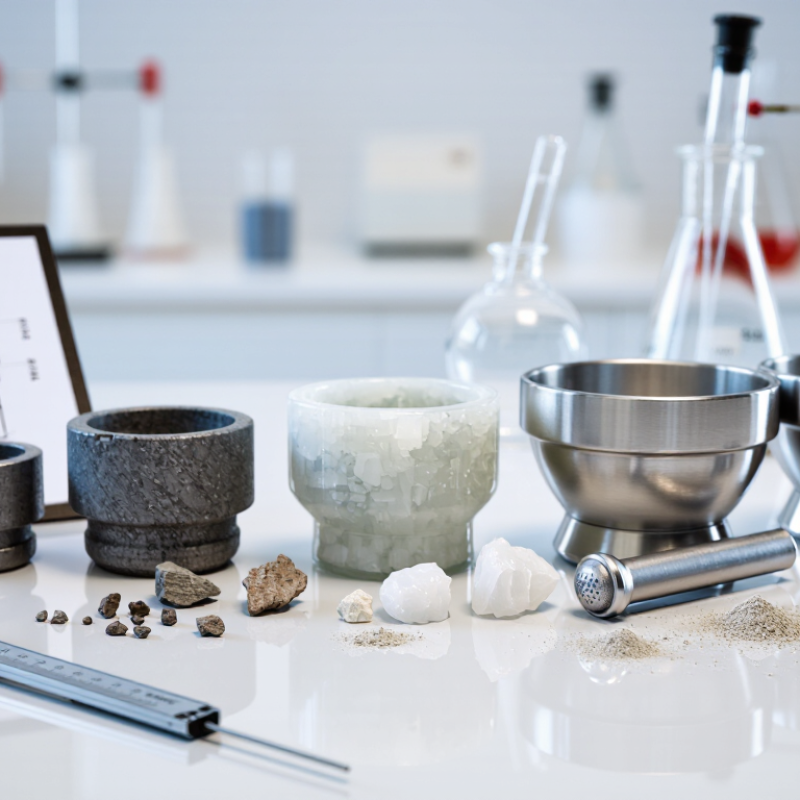
A pulverizing bowl is the working vessel where hard samples are crushed, ground, and homogenized. It works with a pestle, mill, or automated grinder. The bowl’s material directly affects contamination, durability, and final particle size.
This matters because sample preparation can influence every later measurement. ISO/IEC 17025 emphasizes technically valid results, including controlled equipment and repeatable methods. Grand View Research’s 2024 laboratory equipment analysis estimates steady market growth through 2030, reflecting wider demand for reliable preparation tools. The number is useful, but it does not replace a site-specific evaluation.
For global sourcing, compare ceramic, stainless steel, tungsten carbide, and agate options. Ceramic suits many general laboratory samples. Tungsten carbide handles heavy abrasion, but it may introduce trace elements if poorly selected. Check internal volume, hardness, wall thickness, surface finish, and cleaning access. A bowl that holds 100 milliliters may deliver less usable capacity after safe loading limits. Small details matter.
Ask suppliers for material certificates, dimensional tolerances, wear-test records, and contamination data. Request samples before placing a large order. In my experience, catalog descriptions often hide the most important weakness: inconsistent internal surfaces. That can create uneven grinding. It is easy to overlook. Also verify packaging, spare-part availability, inspection procedures, and shipping damage controls. The cheapest bowl may become expensive after repeated cleaning, replacement, and rejected test results.

Which Materials and Applications Require a Specific Bowl Type?
How to Choose a Pulverizing Bowl for Global Sourcing?
Application conditions matter just as much. Soil laboratories should align preparation with ISO 11464, which emphasizes representative drying, grinding, and contamination control. Cement and mineral laboratories need durable bowls, since the International Energy Agency reports that cement production contributes about 7% of global energy-related CO2 emissions.
High-throughput testing therefore increases wear, cleaning frequency, and replacement risk. For steel-related samples, the World Steel Association reported approximately 1.89 billion tonnes of crude steel production in 2023, showing why robust milling capacity matters in industrial sourcing.
A practical specification should include hardness, usable volume, impact energy, cleaning method, and spare-part availability. Small samples need smaller bowls to reduce loss on the walls. Moist samples may smear instead of pulverize. That detail is often missed. Ask for blank-test results and documented material composition, not only a hardness claim. A bowl can look durable and still distort trace analysis. Sometimes, the cheapest option becomes the most expensive mistake.
How to Compare Bowl Materials, Sizes, and Capacity Options?
Choosing a pulverizing bowl starts with the material, not the catalogue photograph. Stainless steel suits routine mineral and soil preparation, while hardened steel offers greater wear resistance for tougher feed. Tungsten carbide handles highly abrasive samples, but it costs more and may contaminate sensitive analyses. Ceramic bowls reduce metallic contamination, yet they can chip under impact. A small fragment is still a serious problem.
Capacity must match the sample and the grinding motion. Common laboratory bowls range from about 5 mL to 500 mL, covering small analytical portions and larger preparation batches. Avoid filling the bowl completely. In practice, leaving roughly 20–30% free space improves movement and reduces spillage, though each mill design behaves differently. A 50 mL bowl may suit a 10–30 g sample, depending on density and moisture. Test it.
Particle-size targets also matter. ASTM C136/C136M-19 supports sieve-based particle-size analysis, so bowl selection should consider whether the final powder must pass a defined sieve. The 2024 Grand View Research laboratory equipment report valued the global market at approximately USD 29 billion in 2023, showing strong demand for standardized preparation workflows. That growth does not remove the need for validation. Compare wear rates, cleaning time, dead zones, and measured contamination across three trial batches. The cheapest bowl may become expensive after repeated replacement. A useful specification sheet should state inner diameter, usable capacity, material hardness, and recommended feed size. Suppliers sometimes omit the last detail. That omission deserves scrutiny.
How to Choose a Pulverizing Bowl for Global Sourcing? - How to Compare Bowl Materials, Sizes, and Capacity Options?
| Bowl Material | Typical Hardness | Common Nominal Sizes | Typical Working Capacity* | Best Suited For | Main Advantages | Main Limitations | Global Sourcing Checks |
|---|---|---|---|---|---|---|---|
| Hardened Carbon Steel | Approximately 7.5–8 Mohs equivalent; hardness is normally specified by Rockwell rating. | 25, 50, 100, 250, 500 mL | About 8–250 mL, depending on bowl size and equipment design | Hard minerals, ores, ceramics, geological samples, and general-purpose laboratory pulverizing | High impact resistance, good wear resistance, broad availability, and generally lower cost | May introduce iron or carbon contamination; can corrode if poorly protected or exposed to moisture | Verify steel grade, heat-treatment hardness, corrosion protection, wall thickness, and replacement-part availability |
| Stainless Steel | Approximately 5.5–6 Mohs equivalent, depending on alloy and heat treatment | 25, 50, 100, 250, 500 mL | About 8–250 mL | Routine sample preparation, food-related testing, pharmaceutical laboratories, and moist or mildly corrosive materials | Good corrosion resistance, easy cleaning, and lower risk of rust-related contamination | Generally wears faster than hardened steel, ceramics, or tungsten carbide when processing very hard materials | Confirm alloy designation, passivation or surface finish, food or laboratory compliance, and resistance to the target chemicals |
| Tungsten Carbide | Approximately 9–9.5 Mohs; very high wear resistance | 25, 50, 100, 250 mL | About 8–125 mL | Very hard minerals, cement, geological materials, sintered products, and samples requiring high abrasion resistance | Excellent hardness and low wear; suitable for demanding pulverizing applications | Higher purchase cost, greater brittleness than steel, and possible tungsten or cobalt contamination | Check carbide composition, binder content, edge chipping resistance, coating or lining integrity, and contamination limits |
| Agate | Approximately 6.5–7 Mohs | 10, 25, 50, 100, 250 mL | About 3–125 mL | Trace analysis, geological samples, chemicals, pigments, and applications where metallic contamination must be minimized | Very low metal contamination and a chemically resistant, non-metallic grinding surface | Brittle, more prone to cracking or chipping, and unsuitable for aggressive impact or very large feed particles | Request crack inspection, wall-thickness consistency, mineral composition, dimensional tolerance, and protective packaging details |
| Alumina Ceramic | Approximately 9 Mohs | 25, 50, 100, 250, 500 mL | About 8–250 mL | Hard minerals, powders, ceramics, pharmaceutical materials, and applications requiring low metallic contamination | High hardness, strong wear resistance, good chemical stability, and comparatively low metal contamination | Brittle under impact; may chip if overloaded or if large particles are processed incorrectly | Confirm alumina purity, apparent density, surface roughness, fracture resistance, and compliance documentation |
| Zirconia Ceramic | Approximately 8–8.5 Mohs | 25, 50, 100, 250 mL | About 8–125 mL | High-purity sample preparation, electronic materials, chemicals, and materials sensitive to metallic contamination | Higher fracture toughness than many traditional ceramics and very low metallic contamination | Higher cost, lower maximum capacity in many product ranges, and possible wear from prolonged abrasive use | Check zirconia stabilization system, purity, density, impact resistance, thermal behavior, and spare-part lead time |
| Selection Dimension | Practical Comparison Guidance | Recommended Sourcing Question |
|---|---|---|
| Sample Hardness | Select a bowl material at least as wear-resistant as the sample whenever low contamination and long service life are priorities. | What is the maximum sample hardness and particle size recommended for the bowl? |
| Contamination Control | Use agate or technical ceramics when iron, chromium, nickel, tungsten, or cobalt contamination could affect test results. | Which elements may be released during normal wear, and are material certificates available? |
| Batch Size | Choose the smallest bowl that can process the required sample quantity efficiently; oversized bowls may reduce grinding efficiency. | What are the nominal volume, recommended working volume, and minimum effective load? |
| Cleaning and Cross-Contamination | Smooth, low-porosity surfaces are easier to clean; removable grinding sets can simplify validated laboratory workflows. | What cleaning agents, temperatures, and sterilization methods are compatible with the bowl? |
| Mechanical Compatibility | The bowl must match the pulverizer’s dimensions, clamping system, oscillation or rotation mode, and maximum operating load. | Can the supplier provide dimensional drawings, tolerance data, and compatibility confirmation for the intended equipment? |
| Packaging and Logistics | Ceramic and agate bowls require impact-resistant packaging; heavier metal and carbide bowls may increase shipping and handling costs. | What are the packed dimensions, gross weight, export packaging method, and replacement lead time? |
What Quality, Safety, and Compatibility Standards Should You Check?
How to Choose a Pulverizing Bowl for Global Sourcing?
A reliable pulverizing bowl starts with material selection. Choose hardened steel, ceramic, or another material that matches the sample and process. Check resistance to abrasion, corrosion, heat, and chemical exposure. Surface finish matters too. Rough areas can trap powder and increase cross-contamination risks. Ask for material certificates, batch traceability, and dimensional inspection reports. An ISO 9001 certificate may show process control, but it does not prove every bowl is suitable.
Tips: Request a sample bowl before placing a large order. Measure its inner diameter, depth, wall thickness, and mating surfaces. Compare these details with your pulverizer’s manual, not only a supplier’s product image. Confirm the locking method, balance, maximum speed, load limit, and operating temperature. Safety guards and secure closure are essential. A loose bowl can damage equipment or release material during operation. Confirm cleaning instructions and whether replacement parts remain available.
Compatibility often fails through small differences. A few millimeters can prevent proper seating. Different alloys may also create unwanted wear or contamination. Ask for test data using a similar material and particle size. Review packaging, moisture protection, labeling, and inspection procedures for international transport. Do not accept vague claims such as “universal fit.” That wording is convenient, but often incomplete. Some decisions may still require practical testing, because catalog data cannot reveal every vibration, cleaning, or wear problem.
How to Evaluate Suppliers, Costs, and Global Shipping Requirements?
Choosing a pulverizing bowl starts with the material being processed.
Ceramic suits many routine samples, while agate reduces contamination risk. Stainless steel handles impact better, but it may affect sensitive analyses. Check bowl hardness, capacity, wall thickness, and cleaning requirements. A supplier should provide dimensional drawings, material certificates, test records, and a clear replacement policy.
Supplier evaluation needs evidence, not polished promises.
Request three recent inspection reports and a sample before placing a large order. Review production capacity, rejection rates, lead times, and export experience. The World Bank’s Logistics Performance Index 2023 assessed 139 economies, highlighting customs, tracking, and delivery reliability. These factors can change your real landed cost.
UNCTAD’s Review of Maritime Transport 2024 reports that ships carry over 80% of global merchandise trade by volume. Therefore, ask for the shipping term, port, carton dimensions, gross weight, and insurance responsibility. A low unit price can become expensive after handling fees and delays.
Tips:
Build a landed-cost sheet. Include tooling, inspection, packaging, freight, duty, storage, and currency movement. Ask whether the bowl needs foam protection or a moisture barrier. Photograph the packed carton before dispatch. I have learned that “standard size” is often not standard enough. Leave room for mistakes, especially when translating technical drawings. Confirm tolerances in millimeters, not informal descriptions. Recheck the first shipment before approving repeat orders.
Article Source:
Siemensstraße 13-15
47608 Geldern
NRW Deutschland
Mail: sale@atmmachinesolutions.com
Head office:
+49 (0) 2831 91021-20
Fax:
+49 (0) 2831 91021-99
SUPPORT and INFO
from 3 p.m. to 6 p.m:
+49 (0) 2831 91021-60
( please ring for a long time )
Monday to Friday
8.00 – 12.30
and 13.00 – 15.00
Visit / collection by appointment only!
➣ Sign up for our newsletter
Benefit from a 20% discount, don’t miss any events and always stay up to date.
To access the actual content, click on the button below. Please note that data will be passed on to third-party providers.
More information