



How to Choose the Right Grab Hook for Global Sourcing?
Choosing the right Grab Hook begins with more than comparing prices or polished product photographs. It requires practical knowledge of load control, chain compatibility, and supplier documentation. The International Labour Organization reports approximately 2.78 million work-related deaths annually, highlighting the serious consequences of weak safety decisions. Small details matter.
A reliable sourcing review should examine the hook’s Working Load Limit, material grade, jaw opening, latch design, and surface protection. Confirm that the Grab Hook matches the chain diameter and grade used in your lifting system. Fit is not universal. ASME B30.26 addresses rigging hardware, while EN 1677 covers components used with chain slings. These standards support safer evaluation, but they do not replace competent inspection.
Global buyers should request test certificates, batch traceability, dimensional drawings, and clear markings on every hook. The U.S. Bureau of Labor Statistics recorded 5,283 fatal workplace injuries in 2023, reminding procurement teams that lifting hardware decisions affect real people. Weather matters too. Salt air can accelerate corrosion, while cold environments may expose brittle materials or poor coatings. A supplier with inspection records, documented heat treatment, and responsive technical support deserves closer attention. Still, no certificate can compensate for incorrect use. That point is easy to overlook. A strong article on How to Choose the Right Grab Hook for Global Sourcing should connect standards with field experience, practical inspection, and honest risk assessment. The cheapest hook may look efficient. It may not remain reliable after repeated loading, rough handling, or uncertain storage conditions.
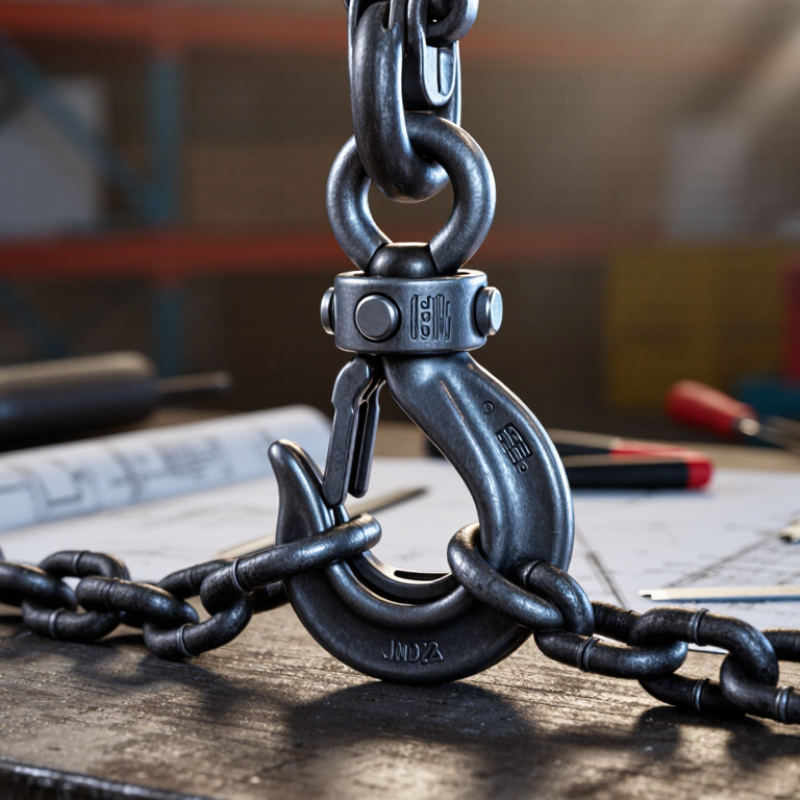
Understand Grab Hook Types and Their Intended Applications
Choosing the right grab hook starts with understanding its shape and intended chain connection.A Clevis Grab Hook uses a removable pin and fits compatible chain assemblies. It is commonly used for shortening chain lengths during lifting or load restraint. An eye grab hook has a closed eye for connecting with a sling, fitting, or permanent link. This design suits fixed attachment points. Wide-throat grab hooks accept larger or specially shaped links, but they are not universal replacements.
A slip grab hook lets a chain pass through its throat for positioning or temporary adjustment. It should not be used where the link can shift out under load. Locking grab hooks add a retaining feature for applications involving movement or vibration. Each type requires a matching chain size, grade, and working load limit. The lowest-rated component controls the safe capacity. A stronger-looking hook may still be unsuitable.
In practical sourcing, inspect the hook marking, throat condition, pin, and seating area. The chain link should rest fully in the bowl, not on the hook tip. Avoid forcing a link into a narrow throat. That mistake is easy to make. I have found that visual inspection alone can create false confidence. Product drawings, test documentation, and clear load tables provide better evidence. Confirm the intended use with the manufacturer before selecting a hook for overhead lifting, especially when the load angle changes.

Match Hook Capacity and Size to the Required Load
How to Choose the Right Grab Hook for Global Sourcing?
A grab hook must match the required load, chain size, and working conditions. Never select it by appearance alone. The working load limit, or WLL, should exceed the actual force applied to the hook. A 1,000-kilogram load may create higher tension when the chain angle changes. At 30 degrees from the horizontal, each leg can carry roughly the full load. Load paths change.
Chain grade matters too. A hook designed for one chain diameter may not seat correctly on another. Check the throat opening, bowl profile, pin area, and latch clearance. The hook should engage the chain link without twisting it. Fit matters. Do not guess.
The U.S. Bureau of Labor Statistics recorded 1,495 fatal work injuries in transportation and material-moving occupations in 2023. That figure supports careful lifting controls, even though it does not measure hook failures directly. For international purchasing, request permanent WLL markings, material identification, proof-test records, and traceability documents. Compare them with ASME B30.10 and EN 1677-1 requirements. These references help, but they do not replace a competent inspection. A certificate can be correct while the wrong hook is ordered. That is the uncomfortable part. Consider impact loading, sharp edges, corrosion, temperature, and uneven lifting before final approval. Allow a sensible capacity margin, without treating it as permission to exceed the marked WLL.
Choose the Right Material, Finish, and Safety Features
When sourcing a grab hook globally, material selection should match the working environment and lifting demand. Alloy steel usually offers strong tensile performance and better resistance to sudden loading. Carbon steel may suit controlled conditions, but it needs careful corrosion protection. Check the working load limit, heat treatment records, and material certificates before comparing prices. A low quote can hide weak traceability.
Finish matters more than appearance. Zinc plating can help in humid storage areas, while paint may suit indoor handling and visual identification. For coastal or chemically exposed environments, ask for a finish tested for the expected conditions. Look closely at threads, weld areas, and hook surfaces. Peeling, sharp edges, or uneven coating deserve questions. They are small warnings.
Safety features should be practical, not decorative. Choose a hook with a secure latch, clear load markings, and a body designed to prevent accidental release. The latch should move smoothly and return fully without force. Confirm proof-testing procedures and inspection intervals with the supplier. Photos are useful, but they cannot replace dimensional checks or sample testing. I once treated clean surface finishing as proof of quality; that assumption was careless. Reliable sourcing requires batch numbers, inspection reports, and consistent packaging. Recheck everything.
Check Standards, Certifications, and Supplier Reliability
Choosing a grab hook for global sourcing starts with evidence, not appearance. Confirm the hook’s working load limit, material grade, heat treatment, and intended chain size. Ask which recognized standard governs its design and testing. Requirements can differ by market and application. A hook that looks oversized may still fail under shock loading. Request dimensional drawings and a clear inspection plan. Small details matter, such as latch movement, weld quality, and stamped identification.
Certifications should be current, traceable, and issued by a competent independent body when required. Check the certificate number, scope, testing date, and covered production site. Do not accept a scanned document without verification. Ask for test reports showing proof-load and destructive-test results, where applicable. A certificate alone is not enough. Batch records, material certificates, and calibration records reveal whether quality controls operate consistently. Some paperwork may look convincing.
Supplier reliability needs practical checking. Review factory capacity, quality staff, complaint handling, and experience exporting similar lifting components. Request a production sample, then use an independent inspection before shipment. Compare the sample with the approved drawing, including dimensions and surface finish. Keep written acceptance criteria. One weak point remains: supplier claims can change after the first order. Re-audit key suppliers periodically, especially after material, tooling, or subcontractor changes. Trust grows from repeated evidence, not promises.
Compare Costs, Lead Times, and Global Shipping Requirements
Choosing a grab hook for global sourcing starts with the load, not the catalog price. Confirm the working load limit, hook opening, chain size, steel grade, and required safety factor. A hook for a compact workshop may be unsuitable for a wet port environment. Ask for test records, dimensional drawings, and batch traceability. Keep it specific. Vague specifications invite expensive substitutions.
Compare total landed cost rather than unit price alone. Include tooling, inspection, export packing, inland transport, freight, insurance, duties, and destination charges. A low quote can become costly when oversized cartons trigger dimensional-weight fees. Sea freight usually reduces costs for planned volumes, while air freight may protect an urgent project. However, urgency is not always real. Recheck the installation date before paying for speed.
Lead time should include production, pre-shipment inspection, document preparation, customs clearance, and final delivery. Request a realistic timeline with milestones, not one optimistic number. Shipping requirements also deserve early review, including invoices, packing lists, origin details, and destination-specific conformity documents. Confirm whether wooden packaging needs treatment marks. Packaging should prevent hook movement and corrosion during humid transit. Do not assume. Compare suppliers using identical specifications, then record every assumption beside the quotation, especially delivery terms and destination charges.
How to Choose the Right Grab Hook for Global Sourcing?
The chart compares indicative factory-level costs and production lead times for commonly sourced grab hook configurations. Prices are shown in USD per unit for standard carbon-steel products before freight, duties, and taxes.
Global Shipping Requirements
| Hook Configuration | Typical Packaging | Export Documentation | Main Shipping Consideration |
|---|---|---|---|
| Clevis Grab Hook | Cartons on pallets | Commercial invoice, packing list, certificate of origin | Low unit cost but higher carton count |
| Slip-on Grab Hook | Bulk cartons or woven bags | Commercial invoice, packing list, product specification | Efficient for consolidated ocean freight |
| Foundry Grab Hook | Heavy-duty cartons on fumigated pallets | Commercial invoice, packing list, material certificate | Higher weight increases freight cost |
| Self-locking Grab Hook | Individual protection inside export cartons | Commercial invoice, packing list, test or inspection report | More components and packaging space |
For global sourcing, the lowest unit price is not always the lowest landed cost. Confirm load rating, material grade, surface treatment, carton dimensions, minimum order quantity, Incoterms, and destination-country import requirements before placing an order.
Article Source:
Siemensstraße 13-15
47608 Geldern
NRW Deutschland
Mail: sale@atmmachinesolutions.com
Head office:
+49 (0) 2831 91021-20
Fax:
+49 (0) 2831 91021-99
SUPPORT and INFO
from 3 p.m. to 6 p.m:
+49 (0) 2831 91021-60
( please ring for a long time )
Monday to Friday
8.00 – 12.30
and 13.00 – 15.00
Visit / collection by appointment only!
➣ Sign up for our newsletter
Benefit from a 20% discount, don’t miss any events and always stay up to date.
To access the actual content, click on the button below. Please note that data will be passed on to third-party providers.
More information