



How to Choose the Best Stadium LED Screen in China?
Choosing the best Stadium Led Screen in China means matching the display to the venue, not simply selecting the largest model or lowest quote. A football ground, indoor arena, and training stadium each create different viewing conditions. Start with the audience’s distance from the screen, the available installation space, and whether the display must show live footage, scores, or advertisements. Pixel pitch affects image clarity at different distances, while brightness and contrast matter under sunlight and stadium lighting. Details matter.
The screen is only one part of the decision. Check the cabinet design, ventilation, weather protection, power requirements, and access for maintenance. Ask suppliers for product specifications, relevant test documentation, warranty terms, and examples of comparable installations. A clear service plan is especially important when a faulty module could disrupt an event. Request a demonstration or sample display, and review how the supplier handles spare parts and technical support. The cheapest offer may leave important costs unclear. Yet the most expensive option is not automatically the right one. This guide explores the practical questions buyers should ask when comparing Chinese manufacturers, assessing screen performance, and balancing image quality, durability, and long-term support. There is no universal best screen; the right choice depends on the venue and its operating needs.
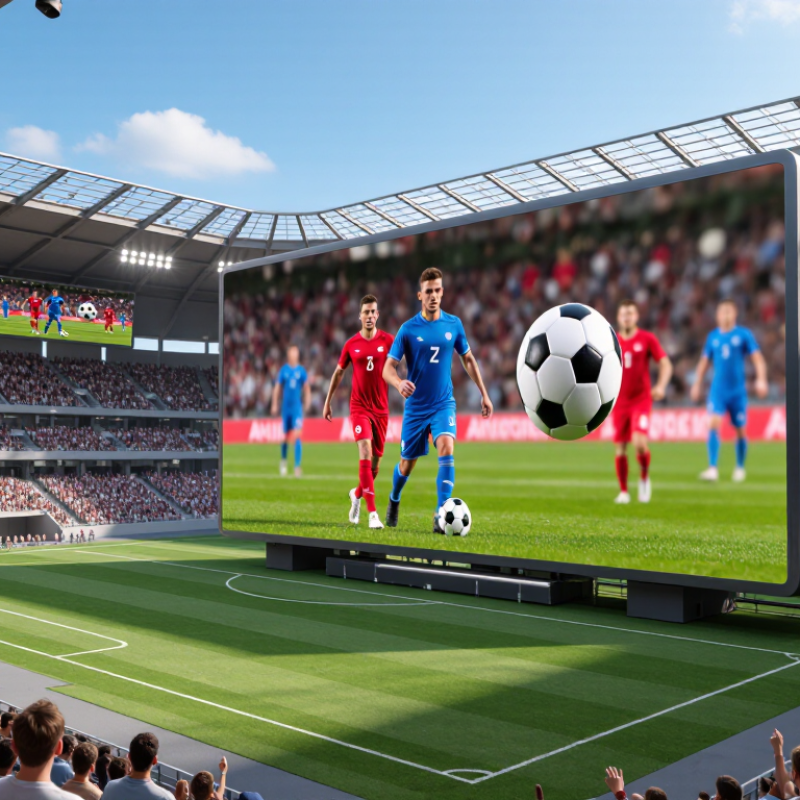
Define the Stadium’s Viewing Needs and Display Objectives
How to Choose the Best Stadium LED Screen in China?
Define the Stadium’s Viewing Needs and Display Objectives
Start with the people in the seats, not a screen catalogue. Walk the venue and note the nearest and farthest viewing points, steep seating angles, roof shadows, and structures that block sightlines. A screen that looks crisp from the front row may appear too small from the upper deck. Match screen size and pixel pitch to actual viewing distances, then check the layout from several sections.
Decide what the display must do during a typical event. Live scores need clear, quickly readable text; replays need smooth motion; sponsor messages need enough time and contrast to be noticed. Sunlight, night lighting, and camera use also affect the choice. Ask for brightness and viewing-angle checks under the stadium’s real conditions. A site visit helps, but measurements can still miss how crowded seats change sightlines. That deserves a second look.
Tips: Photograph the view from key seating areas at different times of day. List the smallest text viewers must read, and test it from the farthest seats. Share event schedules and content examples with the display supplier before comparing proposals.

How to Choose the Best Stadium LED Screen in China?
Define the Stadium’s Viewing Needs and Display Objectives
This chart shows the approximate pixel pitch at which individual pixels subtend one arcminute, a commonly used 20/20 visual-acuity reference. It is a theoretical viewing-distance benchmark, not a product specification: screen content, contrast, sightlines, and audience needs should also guide pixel-pitch selection. Choose a finer pitch when close-up viewing or readable text is important.
Compare LED Screen Types, Pixel Pitch, and Image Performance
Choosing a stadium LED screen starts with the viewing task, not the largest specification. Perimeter boards serve spectators across the pitch; their content must remain legible from distant seats. Center-hung displays are viewed from steeper angles, while concourse screens sit much closer to people. In China, check local sunlight, rain, heat, and maintenance access before fixing the design.
Pixel pitch sets the distance between LED pixels. A common planning rule links 1 mm of pitch to roughly 1 metre of comfortable viewing distance, but it is only a starting point. Pitch around 10–20 mm can suit long-view perimeter boards; closer fascia screens usually need finer pitch. Distance matters. Test actual content from upper and lower seating rows, not just a showroom wall. Fine pitch cannot rescue poor contrast or washed-out colors.
MarketsandMarkets estimated the global LED display market at USD 7.1 billion in 2024 and forecast USD 10.3 billion by 2029. That growth signals wider adoption, not guaranteed image quality. For stadium use, compare measured brightness, grayscale consistency, viewing angle, and camera performance. The International Committee for Display Metrology’s Information Display Measurements Standard (IDMS) provides methods for assessing display characteristics such as luminance and contrast. Ask for camera tests under broadcast shutter settings; a screen can look vivid in person yet show banding on camera. I would not choose from a brightness figure alone.
Assess Brightness, Weather Resistance, and Structural Requirements
How to Choose the Best Stadium LED Screen in China?
Assess Brightness, Weather Resistance, and Structural Requirements
Outdoor stadium displays commonly specify 5,000–8,000 nits for daylight visibility, but the right level depends on viewing distance, sunlight, and reflections. Ask for measured brightness and test a sample under the venue’s actual lighting. Numbers help, but they can mislead. Excessive brightness may cause glare during evening events, so confirm that the screen supports adjustment.
Weather protection needs more than a sealed cabinet. IEC 60529 defines IP65 as dust-tight and protected against water jets; that rating does not cover corrosion or repeated temperature changes. Check drainage, cable entries, and protective coatings. For mounting, China’s GB 50009-2012 Load Code for the Design of Building Structures provides the basis for wind-load calculations. Have a qualified structural engineer assess local wind conditions, screen area, support steel, anchors, and maintenance access. A large display can place substantial force on its frame.
Tips: Request the screen’s brightness and IP test records, then verify them against the project specification. Review wind calculations with the venue’s structural team before fabrication. Leave access for inspection; it is easy to overlook, and difficult to fix later.
How to Choose the Best Stadium LED Screen in China? — Assess Brightness, Weather Resistance, and Structural Requirements
| Evaluation Dimension | Practical Guidance | What to Verify |
|---|---|---|
| Brightness and sunlight | For outdoor stadium displays exposed to daylight, a rated maximum brightness in the approximate range of 5,000–8,000 cd/m² (nits) is commonly considered. The right level depends on direct-sun exposure, screen orientation, and viewing conditions. | Request measured brightness data, confirm the measurement method and operating mode, and check that automatic brightness control can reduce output after dark. |
| Weather and water protection | For exposed outdoor cabinets, IP65-rated front protection is a common specification. Rear-side protection should match the installation location; a sheltered rear may have different requirements from an area exposed to rain or washdown. | Check the IP rating for the complete cabinet and its connectors, not just individual components. Confirm drainage, seals, cable entries, and the maintenance procedure after water exposure. |
| Wind load and structural support | Wind pressure depends on the site, screen height, geometry, exposure, and applicable building regulations. There is no single wind-load value suitable for every stadium installation. | Have a qualified structural engineer check the supporting structure, fixings, screen dead load, wind actions, vibration, and maintenance access against the project location’s applicable codes. |
| Pixel pitch and viewing distance | A finer pixel pitch can improve detail for closer viewers but generally raises cost and may increase power demand. Larger pitches can be suitable for screens viewed from farther away; the best choice depends on audience positions and content. | Assess the nearest and farthest viewing locations, screen dimensions, camera use, and typical content. Review a sample image or mock-up from representative seating positions. |
| Refresh rate and camera performance | A refresh rate of 3,840 Hz or higher is often specified for broadcast-oriented LED displays, but camera results also depend on shutter speed, scan method, processing, and brightness settings. | Test the display with the cameras and shutter settings expected at the venue. Check for flicker, scan lines, color shifts, and image artifacts at several brightness levels. |
| Temperature and ventilation | Operating temperature limits vary by product and installation. Direct sunlight, enclosed cabinets, and limited airflow can raise internal temperatures beyond the surrounding air temperature. | Confirm the specified operating range, thermal management method, ventilation clearances, and any derating requirements. Consider local summer and winter conditions. |
| Power and energy use | Power consumption changes with brightness, displayed content, refresh settings, and operating conditions. Maximum and typical consumption are different figures and should not be treated as interchangeable. | Request both maximum and typical power data, then size circuits and distribution equipment with the project’s electrical engineer. Include monitoring, grounding, and surge protection in the design. |
| Maintenance and service access | Front or rear service access should suit the screen’s mounting location. Outdoor installations also need practical access for inspection, cleaning, and replacement of modules or power components. | Review access routes, lifting points, fall protection, spare-parts availability, and the proposed maintenance plan before finalizing the cabinet layout. |
| Documentation and acceptance testing | A complete project specification should cover display performance, environmental protection, structural interfaces, electrical requirements, and commissioning criteria. | Agree on drawings, test reports, installation tolerances, image-quality checks, training, warranty terms, and handover documents before procurement. |
Note: Figures are practical planning guidance, not a substitute for project-specific testing, engineering calculations, or applicable local regulations.
Evaluate Chinese Manufacturers, Quality Standards, and Support
A stadium LED screen must remain clear under sunlight, rain, and wide viewing angles. When comparing Chinese manufacturers, ask for production records, component specifications, and a sample module—not just a polished video. Check pixel pitch, brightness, refresh rate, and color uniformity against your seating distance and broadcast needs. A bright screen can still look uneven. Request measurements from several points across the display.
Quality documents deserve careful review. Ask which safety and electromagnetic compatibility standards apply to your destination market, and verify certificates with the issuing body. For outdoor installations, confirm the stated IP rating and ask how it was tested. Review aging-test results, cabinet tolerances, spare-part availability, and the warranty exclusions. A factory visit or independent inspection can reveal details a sales presentation may miss, though neither guarantees trouble-free operation. No checklist catches everything.
Support is part of the screen’s real cost. Confirm response times, remote troubleshooting hours, technician availability, and who pays for replacement shipping. Ask for a written commissioning plan and practical training for your local team. If answers stay vague, pause before paying a deposit. One point is easy to overlook: a strong manufacturer still needs a clear handover process. I would compare the promises with actual service records, not assume the cheapest quote is the best value.
Plan Installation, Operation, and Long-Term Maintenance
Choosing a stadium LED screen in China means planning beyond pixel pitch and peak brightness. Map the display, control room, power feeds, and service access before finalizing the structure. The IEA’s Energy Efficiency 2023 report estimates that buildings consume about 30% of global final energy. That figure is facility-wide, not screen-specific. Still, it makes careful energy planning worthwhile. Measure expected peak load, check electrical and cooling capacity, and schedule brightness by daylight and event use.
The U.S. Department of Energy’s LED Luminaire Lifetime guidance distinguishes gradual light-output decline from sudden component failure. Ask for LM-80 test data and TM-21 projections, rather than relying on one headline lifespan. For outdoor cabinets, specify ingress protection under IEC 60529 according to rain, dust, and cleaning exposure. Coastal salt air may need separate attention. Log panel temperatures, power use, signal faults, and pixel defects during operation.
Small details matter. Provide safe access behind the screen, labeled circuits, and a cabinet map that technicians can use under time pressure. Keep compatible spare modules and document calibration settings; otherwise, replacements may look noticeably different. Set a routine for cleaning, inspections, firmware checks, and brightness calibration.
One uncomfortable truth: a lower-cost installation can become expensive when access is poor. I would review the maintenance plan with the venue team before approving the final layout.
Article Source:
Siemensstraße 13-15
47608 Geldern
NRW Deutschland
Mail: sale@atmmachinesolutions.com
Head office:
+49 (0) 2831 91021-20
Fax:
+49 (0) 2831 91021-99
SUPPORT and INFO
from 3 p.m. to 6 p.m:
+49 (0) 2831 91021-60
( please ring for a long time )
Monday to Friday
8.00 – 12.30
and 13.00 – 15.00
Visit / collection by appointment only!
➣ Sign up for our newsletter
Benefit from a 20% discount, don’t miss any events and always stay up to date.
To access the actual content, click on the button below. Please note that data will be passed on to third-party providers.
More information