



What Is the Best Type of Partition Glass in 2026?

Choosing the best Partition Glass in 2026 is less about picking the newest product and more about matching performance to the room. A quiet meeting room needs different glass from a bright reception area. Acoustic privacy, safety, daylight, and budget all matter. There is no universal winner.

The World Green Building Council’s 2019 report, Bringing Embodied Carbon Upfront, estimates that buildings contribute about 39% of global energy-related carbon emissions, including operational and construction-related emissions. That figure is not a partition-glass comparison. It does, however, underline why durability and responsible material choices deserve attention. For technical selection, check product test data and project requirements. Tempered, laminated, insulated, and switchable glass each solve different problems. Acoustic ratings and safety performance should be verified for the specific assembly, not inferred from appearance.

Details matter. A clear panel can still leak sound through an unsealed door gap. A beautiful glass wall can create glare beside a west-facing window. Architect Carl Elefante, a building-industry expert, is widely quoted as saying, “The greenest building is the one that is already built.” His point supports a practical question: can the partition system adapt to the space and last? Not every project needs the most complex option. Some choices deserve a second look. This guide compares common Partition Glass types by privacy, acoustics, safety, maintenance, and cost, while recognizing that final performance depends on the complete installed system.
What Is the Best Type of Partition Glass in 2026?

How Partition Glass Is Defined and Used in Buildings

What Is the Best Type of Partition Glass in 2026?

Partition glass is non-load-bearing interior glazing used to divide rooms while preserving light and sightlines. It may include fixed panels, glazed doors, or both, held within a supporting frame. Unlike exterior windows, partition glass is chosen mainly for room layout, privacy, sound control, and safety. Common settings include offices, meeting rooms, reception areas, and some healthcare or learning spaces. The right specification depends on how people use the space, not appearance alone.

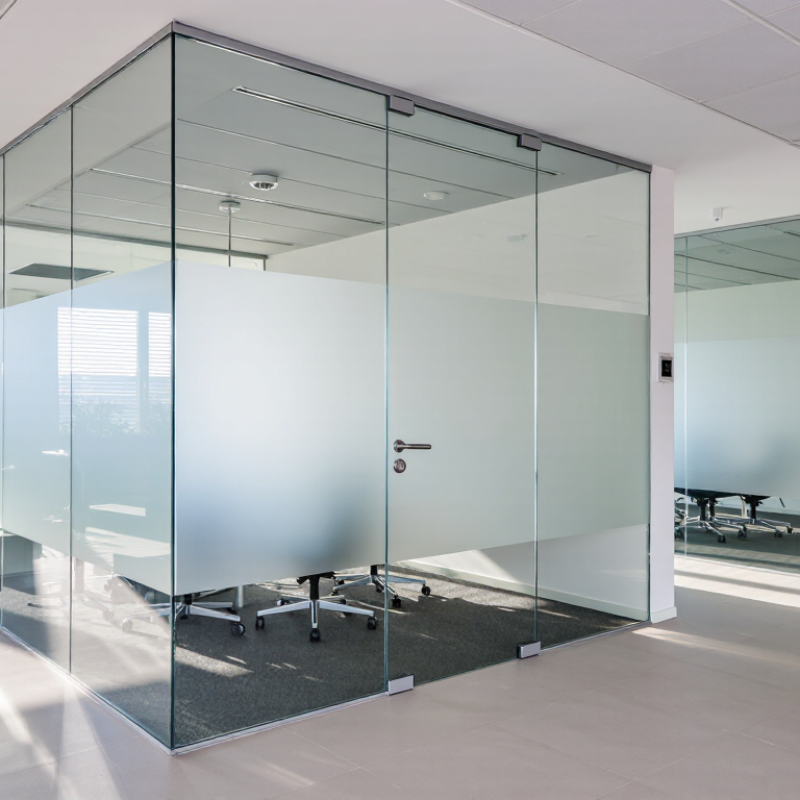
Clear glass keeps rooms visually open, while frosted or patterned finishes soften direct views. Acoustic performance depends on the full assembly, including glass construction, framing, seals, and door gaps. A thicker pane alone does not guarantee a quieter room. For example, a meeting room beside a busy corridor may need well-sealed doors and carefully detailed joints. Qualified professionals should review safety glazing and support details for the building and installation conditions.

One detail is easy to underestimate: glass can make sound feel more noticeable, even when it improves daylight.

Tips: Map door swings, sightlines, and noisy areas before choosing finishes. Ask for acoustic data for the complete system, and consider cleaning needs; fingerprints show quickly on clear panels.


Which Types of Glass Are Commonly Used in Partitions?

Clear tempered glass is a common choice for office partitions because it keeps rooms bright and creates a clean, open sightline. The National Glass Association’s technical guidance describes fully tempered glass as about four times stronger than annealed glass of the same thickness. If it breaks, it usually crumbles into small pieces rather than sharp shards. Still, its edges and mounting details matter.

Laminated glass sandwiches a plastic interlayer between glass sheets. The interlayer helps hold fragments in place after breakage and can improve sound control, depending on the complete assembly. Frosted, acid-etched, or patterned glass offers privacy while allowing daylight through; low-iron glass reduces the green tint visible at exposed edges. Annealed glass is also used in some settings, but it is not a substitute for safety glazing where impact protection is needed. Glass choice depends on use, thickness, framing, and local requirements.

Tips: For a meeting room beside a busy corridor, compare tested acoustic ratings for the full partition system, not just the glass. Ask for safety and acoustic documentation. I would not assume thicker glass always means a quieter room.

What Is the Best Type of Partition Glass in 2026? Which Types of Glass Are Commonly Used in Partitions?

The best choice depends on safety requirements, privacy, sound control, fire-rating needs, and the partition system. These glass types are commonly used in interior partitions.

Glass Type Typical Characteristics Common Partition Uses Key Considerations
Clear tempered glass Heat-treated safety glass that is stronger than annealed glass. When broken, it generally fragments into small pieces. Office dividers, meeting rooms, interior screens, and glass doors. A popular general-purpose option where transparency and impact resistance are priorities. It must be cut and drilled before tempering.
Laminated glass Two or more glass layers bonded with an interlayer. The interlayer helps retain fragments if the glass breaks. Partitions where fragment retention, added security, or improved sound reduction is desired. Performance depends on the glass, interlayer, thickness, and full partition construction. It is usually heavier than a single pane.
Tempered laminated glass Tempered glass panes bonded with an interlayer, combining safety-glazing properties with fragment retention. High-traffic areas, glazed doors, and partitions where both impact safety and post-breakage retention matter. Specify a tested, compatible assembly and suitable edge protection; the glass cannot be cut after tempering.
Frosted or acid-etched glass A translucent finish that diffuses light and reduces clear visibility. It can be applied to suitable glass substrates. Meeting rooms, private offices, healthcare spaces, and areas needing visual screening. Provides visual privacy, not sound insulation. The chosen substrate should still meet applicable safety-glazing requirements.
Patterned or textured glass Surface patterns distort views while allowing some daylight to pass through. Decorative screens, reception areas, and partitions requiring partial visual privacy. Privacy varies by pattern and lighting. Check cleaning needs and whether the selected product is available as safety glass.
Fire-rated glass Specially tested glazing designed to meet specified fire-protection criteria when used in an approved system. Partitions and openings where building codes require a fire-rated glazed assembly. Fire performance applies to the complete tested assembly, including framing, seals, and installation—not glass alone. Confirm the required rating with the local code authority.
Insulating glass unit (IGU) Two or more panes separated by a sealed cavity; some units use laminated panes or acoustic interlayers. Partitions adjoining exterior spaces or projects with specific thermal or sound-control goals. Often thicker and heavier than single glazing. Suitability depends on the framing system and project performance requirements.

Selection tip: For many standard interior office partitions, clear tempered glass is a practical starting point. Choose laminated or tempered laminated glass when fragment retention or enhanced sound control is important, and use a certified fire-rated system wherever required. Confirm glass thickness, safety classification, and installation details with the project designer and local building codes.

How Partition Glass Types Differ in Safety, Privacy, and Performance

Partition glass differs most in how it handles impact, sound, and sightlines. Tempered glass breaks into smaller pieces, while laminated glass holds fragments together after breakage. The U.S. Consumer Product Safety Commission’s 16 CFR Part 1201 uses impact tests of 150 and 400 foot-pounds for its two safety categories. Those thresholds help frame risk, but they do not replace checking the tested glass assembly and its installation details.

Privacy depends on more than whether glass looks frosted. Acoustic performance is measured using methods such as ASTM E90, with ratings classified under ASTM E413; ask for test results for the full partition, including doors, seals, and joints. A high glass-only rating can be misleading.

For visual privacy, patterned, frosted, or switchable glass can obscure faces, but light and shadows may still reveal movement. Double glazing can improve sound control, though it adds weight and cost. I still find door gaps easy to overlook. A site review should consider speech privacy, nearby noise, cleaning, and how the space is actually used.

Which Factors Determine the Best Partition Glass for a Space?

The best partition glass depends on what the room must do. A quiet interview room needs stronger speech privacy than a bright project area. For sound control, compare tested Sound Transmission Class ratings, but assess the complete assembly. Gaps beneath doors, ceiling voids, and poorly sealed edges can undermine a high-rated panel. Small details matter.

Daylight, glare, and room orientation also shape the choice. The World Green Building Council’s 2014 report, Health, Wellbeing & Productivity in Offices, reviewed evidence linking better lighting with productivity gains of up to 23%. This is not a glass-specific guarantee. Still, it supports considering visible-light transmission, nearby windows, and screen reflections before choosing clear, tinted, or patterned glass. A sunny west-facing wall may need different treatment from a shaded corridor.

Privacy and maintenance complete the picture. Clear glass helps people share sightlines, while frosted bands can block seated views without darkening the whole room. Laminated glass may help reduce sound transfer and retain fragments if damaged; confirm the tested specification and applicable safety requirements with a qualified designer. There is no perfect pane. I would also check cleaning access and fingerprints on sample panels, since finishes that look subtle in a showroom can feel busy across a long office wall.

What Is the Best Type of Partition Glass in 2026?

Visible light transmission (VLT) is one useful factor when choosing partition glass. The ranges below are typical estimates; exact performance varies by glass thickness, treatment, and product specification.

Clear glass generally maximizes daylight, while tinted glass can reduce glare and light transmission. Frosted glass offers visual privacy while still allowing light through. Choose based on the space’s daylight, privacy, acoustic, and safety requirements—not VLT alone.

How to Match Partition Glass to Building Needs in 2026

The best partition glass depends on what the room must do. Start with privacy, sound control, daylight, and safety—not appearance alone. For a meeting room facing a busy corridor, laminated acoustic glass may reduce noise while keeping broken pieces attached to its interlayer. Yet the frame, seals, and installation also affect sound performance. Glass alone is not a soundproofing promise.

For open offices that need borrowed daylight, clear tempered glass can create separation without making the space feel closed. If people need visual privacy during calls, frosted glass or switchable privacy glazing may work better. Needs vary. Switchable systems require power and can add maintenance, so check how they perform during outages and who will service them. In a clinic or classroom, consider how often surfaces need cleaning and whether the layout exposes sensitive activities.

Safety requirements depend on location and building use. Ask a qualified designer or glazier to confirm glass type, thickness, supports, and applicable local requirements before ordering. For a sun-facing room, review heat and glare as well; clear glass can still make screens hard to read at 3 p.m. A sample panel viewed at the actual site is useful. It may reveal reflections or privacy gaps that drawings miss. Even then, samples cannot fully predict the finished room.

Kontaktbox-Frau

  • CNC-STEP – Quick contact